Quick Answer
Introduction
A shipment that disappears between pickup and delivery creates more than an information gap. It can affect inventory planning, customer service, warehouse labor, delivery appointments, and cash flow. That is why freight visibility has become a practical operating tool rather than a nice extra.
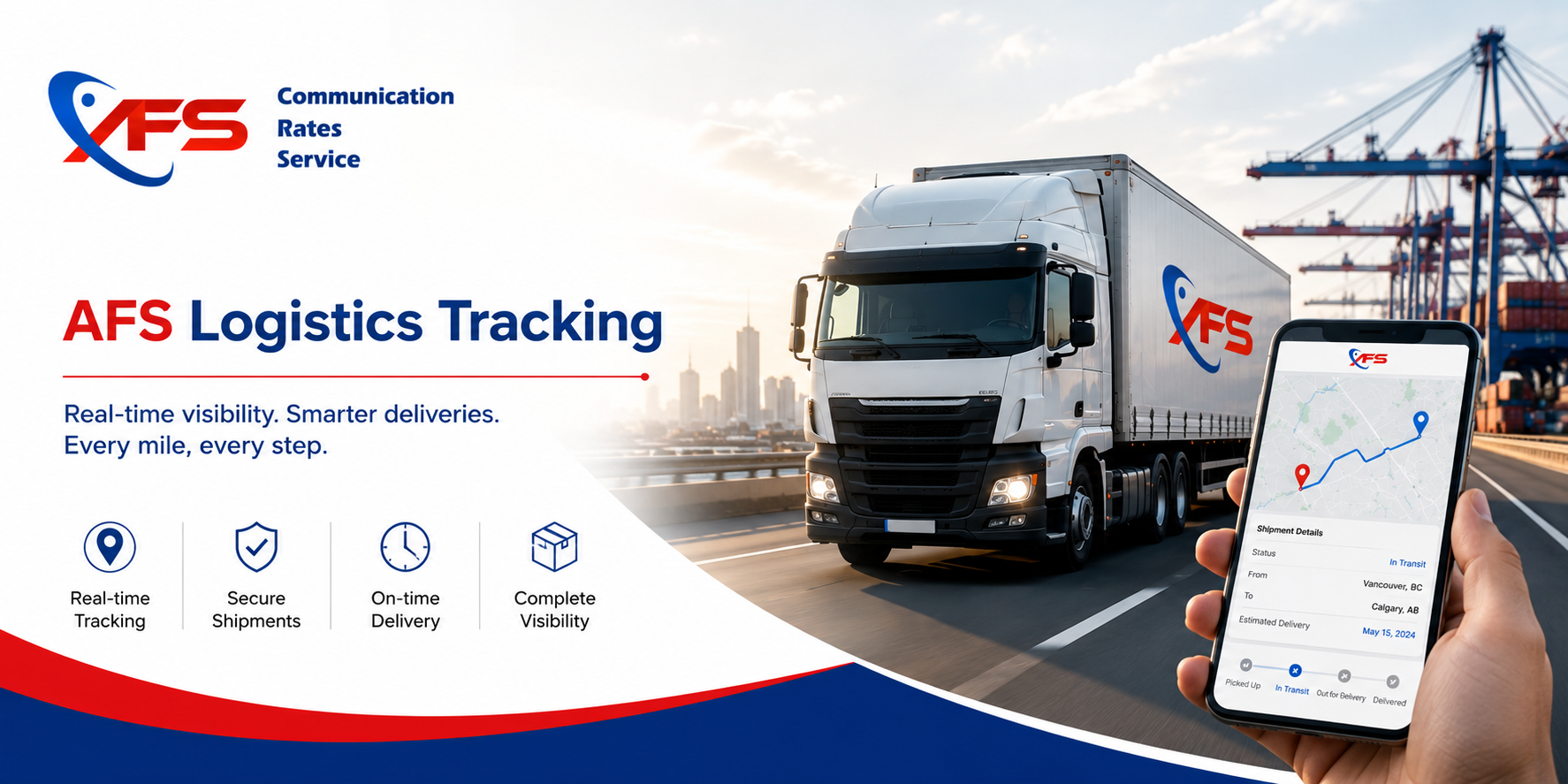
AFS logistics tracking is designed around that need for visibility. AFS Trans Co. provides real-time shipment tracking through its transportation management system, along with trucking, logistics, cross-border transportation, and warehousing services. The company says its TMS can also keep key shipping documents organized and give customers a portal for shipment status, paperwork, and communication.
For companies shipping furniture, beverages, retail inventory, food products, equipment, or palletized freight, the goal is the same: know where the shipment stands, know what needs to happen next, and have enough information to make a decision before a small delay becomes a larger problem.
Why Freight Tracking Matters in Vancouver
Vancouver is a major gateway for Canadian and international trade. The Port of Vancouver's published 2024 key facts report lists 158 million metric tonnes of total cargo and 3.47 million TEUs of container volume, illustrating the scale of freight moving through the region. In a busy logistics environment, visibility helps businesses coordinate the road, warehouse, and delivery stages around the same shipment.
Transport Canada also identifies end-to-end supply chain visibility and data sharing as important parts of improving the efficiency and resilience of Canada's transportation system. In practical terms, that means businesses benefit when shipment information is available early enough to support real decisions.
How AFS Logistics Tracking Works
Tracking should answer more than 'Where is my truck?' A useful tracking process connects shipment status with the people and operations that depend on it. A typical workflow looks like this:
1. Shipment is created: Order details, pickup information, delivery requirements, and relevant documents are entered into the transportation workflow.
2. Pickup is confirmed: The shipment moves into active transportation, giving the shipper a clear starting point for transit monitoring.
3. Movement is monitored: GPS and transportation-management data can provide ongoing visibility into shipment progress.
4. Exceptions are addressed: If a delivery schedule, route, or handling requirement changes, the operations team can respond instead of waiting for the final delivery.
5. Delivery is completed: The shipment reaches the destination and the status can be updated for the shipper and relevant stakeholders.
For businesses that want more detail on the technology behind this process, see AFS Trans Co.'s Transportation Management System (TMS) page, which explains real-time tracking, shipment documents, customer portals, and ERP integration.
Key Benefits of AFS Logistics Tracking
What to Look for in Freight Forwarding Companies in Vancouver
Searching for freight forwarding companies in Vancouver can produce a long list of providers. The better question is what happens after you choose one. A reliable logistics partner should be able to explain how freight is moved, how updates are provided, how exceptions are handled, and who is responsible when a shipment crosses multiple stages.
Use these checks when comparing providers:
- Ask how shipment tracking works and how frequently status information is updated.
- Confirm whether the provider handles domestic, cross-border, or multimodal freight that matches your lanes.
- Check whether warehousing, transloading, cross-docking, or fulfillment can be coordinated with transportation.
- Ask how shipping documents and delivery information are shared with customers.
- Clarify who manages communication when a shipment is delayed or a delivery appointment changes.
- Look for clear pricing and a defined point of contact rather than a process that depends on repeated follow-up.
AFS Trans Co. also publishes a practical guide on how to find reliable freight forwarding companies in Vancouver, which can help businesses build a more useful provider comparison checklist.
How Tracking Connects Transportation With Warehousing
Freight does not stop being important when it reaches a warehouse. Inbound timing affects receiving labor, storage availability, order fulfillment, and outbound scheduling. Tracking helps warehouse teams prepare for incoming loads instead of reacting when a truck is already at the door.
This is especially important for products that need controlled storage or careful handling. For example, beverage distributors may need inventory visibility that connects transportation with storage, picking, expiration-date monitoring, and distribution. AFS Trans Co. describes its beverage warehousing service as using climate-controlled storage, inventory management tools, RFID tagging, and barcode scanning.
For beverage distributors, see Beverage Warehousing in Vancouver for details on storage, inventory management, and distribution support.
Why Tracking Matters for Furniture Freight
Furniture shipments create a few challenges that are easy to overlook. A sofa, dining table, mattress, cabinet, or other large item can take more space than a standard carton, may require special handling, and often has a delivery appointment attached to it. A delay can affect both the receiving warehouse and the customer waiting for the item.
For furniture businesses, tracking can support:
- Inbound planning for bulky or palletized inventory.
- Better coordination between warehouse receiving and transportation teams.
- Delivery appointment planning for retail locations, showrooms, or customers.
- Faster communication when a shipment is running behind schedule.
- More organized movement of returned, damaged, or replacement furniture through reverse logistics.
A simple example: a furniture retailer expecting a truckload of sofas can use shipment visibility to prepare receiving space, schedule unloading labor, and update store teams. If the load is delayed, the retailer has a chance to adjust the receiving plan rather than discovering the problem at the original appointment time.
AFS Transportation for Different Freight Needs
Not every shipment requires a full trailer. Smaller palletized loads may be better suited to LTL, while larger or time-sensitive shipments may call for full truckload or dedicated capacity. AFS Trans Co. offers dry and refrigerated LTL options, full truckload services, temperature-controlled transportation, cross-docking, and cross-border shipping.
The advantage of combining transportation with tracking is that the shipment status becomes part of the operating process. Teams can use the information to plan receiving, communicate with customers, and make decisions about the next stage of the freight.
For smaller or consolidated loads, explore LTL Freight Services in Vancouver to see how AFS Trans Co. handles LTL shipping, cross-border freight, and real-time shipment visibility.
Tracking and Cross-Docking: Keeping Freight Moving
Cross-docking and transloading are useful when freight needs to move from one transportation stage to another without sitting in storage for an extended period. Visibility becomes important because timing has to line up: inbound freight must arrive, be unloaded or transferred, and move to the next destination with minimal disruption.
AFS Trans Co. provides cross-docking and transloading services connected to Vancouver-area container terminals and describes handling for Metro Vancouver, eastern Canada, and cross-border destinations. For importers and distributors, coordinating these steps can reduce unnecessary waiting and help keep freight moving.
See Cross-Docking & Transloading Services for more information about port-related freight transfers and onward transportation.
Expert Tips for Getting More Value From Freight Tracking
- Do not track in isolation. Connect shipment status with warehouse receiving, customer communication, and delivery planning.
- Set an exception process. Decide in advance who should act when a shipment misses a milestone or schedule.
- Use the right shipment data. Reference numbers, pickup dates, delivery locations, load type, and documents should stay accurate.
- Prepare receiving teams early. For bulky furniture, beverages, or palletized freight, a little notice can make unloading much easier.
- Review recurring delays. Tracking data can reveal patterns such as late pickups, border delays, appointment issues, or repeated handling problems.
- Keep customers informed. A useful status update is better than a vague promise. Share what is known and what happens next.
Freight Tracking Checklist for Shippers
- Shipment reference or tracking number is available.
- Pickup and delivery details are correct.
- Freight type and handling requirements are documented.
- Required shipping documents are attached or accessible.
- The receiving team knows the expected delivery window.
- Exception contacts are identified before transit begins.
- Customers or internal teams know where to get shipment updates.
- Warehouse and transportation teams can coordinate inbound and outbound activity.
Frequently Asked Questions
What is AFS logistics tracking?
AFS logistics tracking refers to shipment visibility provided through AFS Trans Co.'s transportation and logistics systems. It can help customers monitor freight movement, check shipment status, organize documentation, and communicate with the logistics team.
How does freight tracking help businesses?
Tracking helps businesses know where shipments stand, prepare warehouses and receiving teams, communicate more accurately with customers, and respond sooner when a delivery schedule changes.
Can AFS logistics tracking be used for LTL shipments?
Yes. AFS Trans Co. offers LTL freight services and describes real-time shipment tracking as part of its LTL offering. LTL can be useful when a shipment does not require a full trailer.
Does AFS Trans Co. provide beverage warehousing in Vancouver?
Yes. AFS Trans Co. provides beverage warehousing with climate-controlled storage, inventory management, RFID and barcode-based tracking, and distribution support for beverage products.
Is shipment tracking useful for furniture deliveries?
Yes. Furniture can require more space, careful handling, and scheduled delivery windows. Tracking can help coordinate warehouse receiving, transportation, delivery appointments, and customer updates.
What should I ask a logistics provider before shipping?
Ask about tracking, delivery communication, cross-border capabilities, warehouse support, freight handling, documentation, pricing, and how the provider manages delays or other shipment exceptions.
Conclusion
Freight tracking is most valuable when it helps people make better decisions. Knowing that a shipment is moving is useful, but knowing its status early enough to prepare a warehouse, adjust a delivery appointment, update a customer, or respond to a delay is much more valuable.
AFS logistics tracking fits into a wider transportation and warehousing approach that includes trucking, LTL, full truckload, cross-border freight, temperature-controlled transportation, warehousing, and cross-docking. That combination can give businesses a clearer view of freight from pickup through delivery.
If your current process still depends on phone calls, spreadsheets, or waiting for a driver to confirm where a load is, it may be time to look at a more connected approach. AFS Trans Co. can help you evaluate the transportation, tracking, and warehousing services that fit your shipment requirements.
Want more practical logistics guidance? Browse the AFS Trans Co. logistics blog for additional articles on freight tracking, warehousing, transportation, and supply chain management.