Full Truckload Shipping Services
When speed, security, and volume are all on the line, a dedicated truck is the right call. AFS Trans Co. provides full truckload (FTL) shipping services from Vancouver, BC, across Canada, and cross-border into the United States — giving businesses that need to move large or time-sensitive freight the certainty of a truck that belongs entirely to them.
With FTL, your cargo is the only cargo. One pickup, one destination, no terminal handling, no co-mingling with other shippers' freight. The result is faster transit, fewer damage claims, and a level of control over your supply chain that LTL simply cannot match for high-volume loads.
What Is Full Truckload (FTL) Shipping and When Does It Make Sense?
FTL shipping means one shipper's freight fills — or nearly fills — an entire 48' or 53' trailer. The carrier picks up your load and drives point-to-point to your destination without intermediate stops or transfers. This is fundamentally different from LTL, where your pallets share space and may pass through multiple terminals en route.
FTL is the right mode when:
- Your shipment is 10 or more pallets, or exceeds approximately 15,000 lbs
- Your freight is time-sensitive and cannot tolerate LTL transit variability
- Your goods are fragile, high-value, or require controlled handling throughout
- You are moving temperature-sensitive products that need a dedicated reefer environment
- You need a sealed trailer from origin to destination for security or regulatory reasons
As a rule of thumb, FTL becomes cost-competitive with LTL when your shipment fills more than 50% of a trailer — typically around 10 to 12 pallets. Below that threshold, LTL is usually more economical. Our freight team will always recommend the right mode for your actual load.
AFS Trans Co. FTL Equipment Options
Not all freight is the same, and neither is our equipment. AFS Trans Co. operates a mixed fleet designed to handle the full range of full truckload shipping requirements across Canada and the US:
Dry Van — 53' Trailer Standard enclosed trailer for general freight. Ideal for palletized goods, consumer products, industrial parts, and non-perishables. Up to 45,000 lbs payload, 2,500 cu ft capacity. | Refrigerated (Reefer) Trailer Temperature-controlled trailers maintaining -20°C to +25°C ranges. Essential for food, pharmaceuticals, produce, and any temperature-sensitive cargo. Continuous monitoring with pre-cool confirmation. |
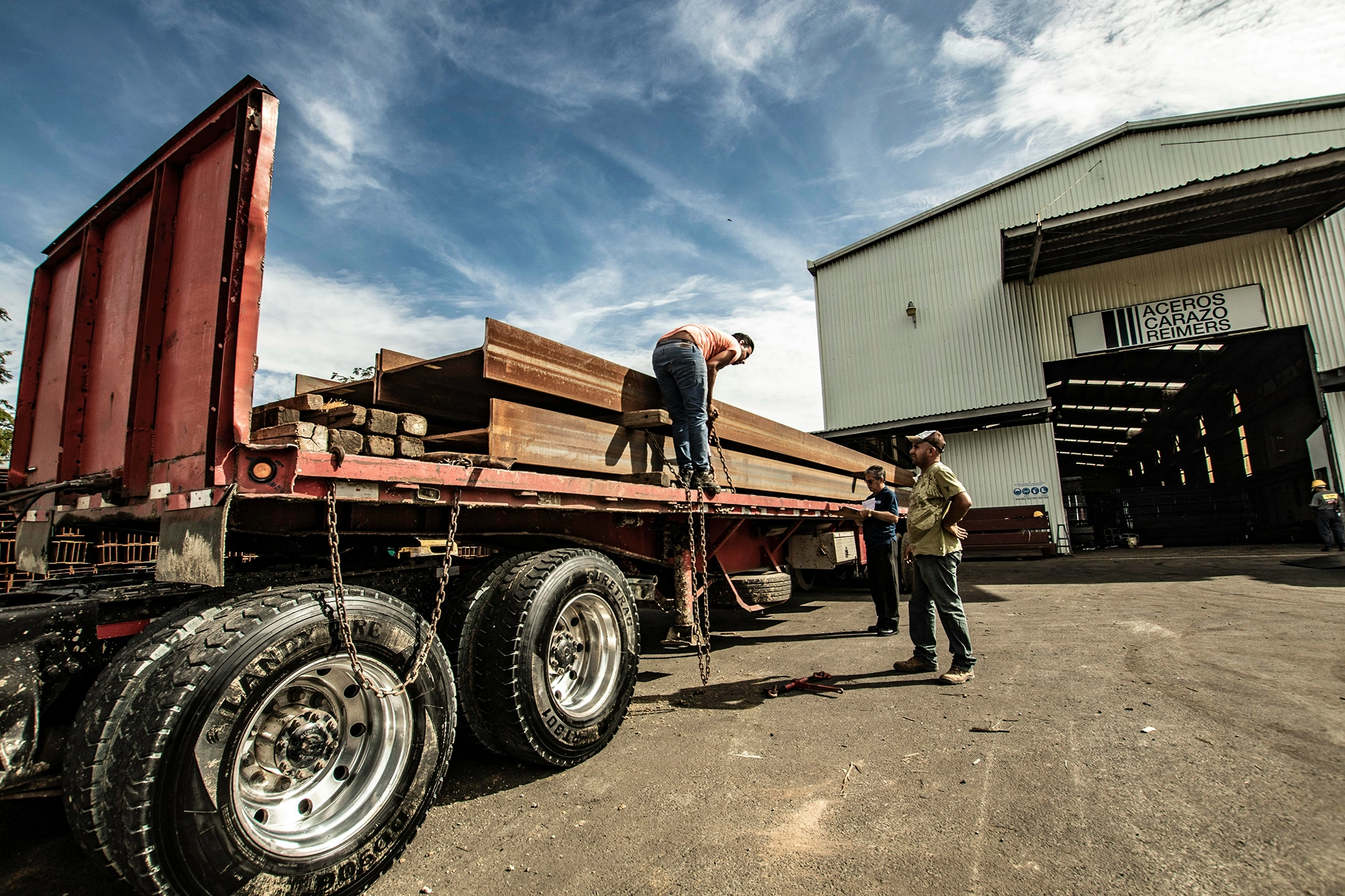
Flatbed — 48'/53' Open deck for oversized or heavy equipment, construction materials, machinery, and steel. Supports step-deck and RGN configurations for taller loads. Permit coordination included. | Partial Truckload (PTL) A middle ground between FTL and LTL — for 6 to 12 pallets that are too large for LTL pricing but too small to fill a truck. Direct routing with limited co-loading, faster than standard LTL. |
Cross-Country Coverage: Where AFS Trans Co. FTL Moves Freight
Our full truckload network connects Vancouver and Metro Vancouver to every major Canadian market, as well as key US destinations across the Pacific Northwest, Midwest, and beyond. We specialize in the high-demand western Canada corridors where equipment availability and transit reliability matter most.
TRANSIT TIME REFERENCE — FULL TRUCKLOAD FROM VANCOUVER, BC
| Origin | Destination | Dry Van Transit | Reefer Transit |
|---|---|---|---|
| Vancouver, BC | Calgary, AB | 1–2 days | 1–2 days |
| Vancouver, BC | Edmonton, AB | 2 days | 2 days |
| Vancouver, BC | Winnipeg, MB | 3–4 days | 3–4 days |
| Vancouver, BC | Toronto, ON | 4–5 days | 5–6 days |
| Vancouver, BC | Montreal, QC | 5–6 days | 6–7 days |
| Vancouver, BC | Seattle/Portland | 1 day | 1 day |
Transit times reflect standard FTL service on established lanes. Expedited FTL service with guaranteed delivery windows is available — contact our team for time-critical freight requirements.
FTL Pricing in 2026: What Vancouver Shippers Need to Know
Full truckload pricing in Canada is calculated primarily on a cost-per-mile basis, factoring in distance, fuel surcharges, equipment type, lane demand, and any accessorial services required. In 2026, the FTL market in Canada is showing cautious stability: capacity remains structurally tighter than in the US due to ongoing fleet contraction, while domestic freight demand and cross-border volumes remain moderate.
What this means practically for Vancouver shippers:
- Spot rates on core western Canada lanes remain competitive vs. late 2024 peaks
- Contract pricing offers the strongest protection against mid-year rate increases as H2 2026 demand is expected to firm up
- Reefer FTL lanes command a 10–20% premium over dry van on equivalent distances — justified by equipment cost and temperature compliance requirements
- Cross-border FTL into the US carries additional fuel surcharge variability driven by USD/CAD exchange rates and border processing times
AFS Trans Co. offers both spot and contract FTL rates. Businesses with predictable lane needs are encouraged to discuss volume pricing agreements with our team before the next seasonal rate cycle.
Driver Safety Standards and GPS Tracking
Your freight is only as reliable as the team moving it. Every AFS Trans Co. FTL driver meets federally mandated hours-of-service requirements, holds a valid commercial driver's licence (CDL/Class 1), and undergoes regular safety and compliance training in line with Transport Canada standards.
Our fleet is equipped with GPS tracking on every unit, giving you live shipment visibility from the moment your truck departs to confirmed delivery. For reefer loads, remote temperature monitoring provides continuous alerts if cargo conditions deviate outside your specified range — so nothing is left to guesswork on a 4-day cross-country haul.
Key driver and fleet standards:
- ELD (Electronic Logging Device) compliance on all vehicles for accurate HOS records
- Pre-trip and post-trip inspections documented digitally for every load
- Continuous GPS tracking accessible by customers in real time
- Temperature logging with 15-minute interval records for all reefer shipments
- CVOR-compliant fleet maintenance schedules for British Columbia operations
Case Studies: AFS Trans Co. FTL in Action
CASE STUDY 1 — Reefer FTL | Food & Beverage Vancouver Food Producer: Coast-to-Coast Temperature-Controlled Delivery A Metro Vancouver food manufacturer needed to move 22 pallets of refrigerated product to a Toronto distribution centre on a strict 5-day delivery window. LTL reefer options on this lane carried high reclassification risk and 6–8 day transit. AFS Trans Co. dispatched a dedicated 53' reefer unit with pre-cool confirmation, continuous remote temperature monitoring, and a direct Vancouver-to-Toronto run without terminal transfers. Result: Delivery completed in 4.5 days within the required temperature band (+2°C to +4°C) throughout transit. Zero product loss. Client now operates a monthly FTL reefer contract with AFS. |
CASE STUDY 2 — Dry Van FTL | Industrial Equipment BC Manufacturer: Time-Sensitive Machine Parts Delivery to Edmonton A Burnaby-based manufacturer faced a production shutdown at their Edmonton facility due to delayed machine parts — 14 pallets, 28,000 lbs. Standard LTL transit time was 3–4 days with pickup backlogs. AFS Trans Co. dispatched a dry van FTL unit within 6 hours of the quote request and moved the freight overnight on a direct Vancouver–Edmonton lane. Result: Delivery completed in under 24 hours. Production shutdown avoided. The customer reported a saving of approximately $40,000 in downtime costs relative to the premium paid for expedited FTL service. |
“We have used a lot of full truckload shipping companies over the years. AFS Trans Co. is the first carrier that has never once missed a reefer delivery temperature spec. That matters enormously when you are moving food product coast to coast.” — James P., Supply Chain Director, BC Food & Beverage Company |
Frequently Asked Questions: Full Truckload Shipping Canada
How much does FTL shipping cost from Vancouver?
FTL rates from Vancouver vary based on destination, equipment type (dry van, reefer, flatbed), distance, fuel surcharges, and current lane demand. In 2026, dry van FTL rates on western Canada lanes are broadly stable. Contact AFS Trans Co. for a lane-specific quote — we provide all-in pricing with no hidden accessorial surprises.
When is FTL cheaper than LTL?
FTL typically becomes more cost-effective than LTL when your shipment exceeds 10 to 12 pallets or 15,000 lbs. At that volume, the per-pallet cost of a dedicated FTL truck often falls below what you would pay for LTL freight class rates, terminal handling fees, and potential reclassification charges combined.
Do you offer cross-border FTL shipping from Vancouver to the US?
Yes. AFS Trans Co. operates FTL lanes from Vancouver into the US Pacific Northwest (Seattle, Portland) and beyond. We handle all customs documentation, PAPS/PARS processing, and can arrange bonded carrier status for sensitive cargo. Cross-border reefer FTL is also available for temperature-sensitive freight moving across the 49th parallel.
What is the difference between FTL and partial truckload (PTL)?
FTL uses a full dedicated 53' trailer for one shipper's freight. Partial truckload (PTL) moves 6 to 12 pallets in a dedicated truck with limited co-loading — fewer stops and faster transit than LTL, but at a lower cost than a full FTL commitment. AFS Trans Co. offers both options and will recommend the right mode for your shipment size and timeline.
How does GPS tracking work on AFS Trans Co. FTL shipments?
Every AFS Trans Co. truck is equipped with live GPS tracking. Once your FTL shipment is booked, you receive access to real-time location updates. For reefer loads, remote temperature monitoring is included — we alert you immediately if temperatures deviate from your specified range during transit.