Every business owner knows that sinking feeling — the moment you open your monthly logistics report and realize the numbers just don't add up. Shipping delays, overstocked inventory, missed deliveries, and spiraling freight costs quietly eating into margins you worked hard to build. If this sounds familiar, you're not alone.
Vancouver's position as Canada's primary Pacific gateway makes it one of the most strategically significant — and logistically demanding — cities on the continent. Businesses that get their warehousing right here don't just save money; they build a competitive edge that compounds over time. Those that get it wrong pay for it, often without fully understanding why.
This article is for business owners, operations managers, and supply chain decision-makers who are tired of treating warehousing as a fixed cost they can't control. Because the truth is — with the right approach to warehousing services in Vancouver, your storage and distribution function can shift from a cost center into a genuine strategic asset.
Why Vancouver's Logistics Landscape Is Both an Opportunity and a Trap
Let's be honest about the reality here. Vancouver is surrounded by logistics infrastructure that most cities can only dream of — direct access to the Port of Vancouver (Canada's busiest), CN and CP rail connections, proximity to the US border, and Vancouver International Airport minutes from major industrial zones. On paper, it's a logistics paradise.
In practice, though, that same infrastructure creates intense demand for warehouse space. Industrial real estate in the Lower Mainland has consistently ranked among the priciest in Canada. Labor costs are higher than the national average. And when port congestion flares up — which it does — entire supply chains can stall within hours.
Businesses that try to manage all of this on their own — leasing private warehouse space, hiring staff, managing inventory systems, and coordinating carriers — often find themselves burning capital at an alarming rate. What looks like a warehousing problem is almost always a strategy problem.
"The businesses that truly thrive in Vancouver don't necessarily have the biggest warehouses — they have the smartest partnerships."
The Real Cost of Inefficient Warehousing (It's More Than You Think)
Most operators focus on the obvious costs — rent, labor, utilities. But the hidden costs of poor warehousing are often far larger, and far more damaging. Consider what happens when your inventory isn't managed well:
Products sitting too long in storage accumulate demurrage and handling charges that nobody planned for
Inaccurate inventory counts lead to either stockouts or costly overstock situations — both erode customer trust
Poor location choices mean you're paying more for drayage, with longer transit times and higher fuel costs
No real-time visibility into stock levels means decisions get made on guesswork rather than data
Seasonal demand spikes push businesses into expensive short-term solutions that weren't budgeted for
Each of these is a leak in the bucket. Individually manageable, perhaps. Together, they represent a significant drag on profitability that doesn't show up neatly on a single line item — which is exactly why it often goes unaddressed for so long.
23%
40%
2–3×
What Professional Warehousing Services in Vancouver Actually Give You
There's a meaningful difference between renting shelf space and working with a professional warehousing partner. The first is a transaction. The second is a relationship that shapes how your entire supply chain performs.
Strategic Location, Not Just Square Footage
The best warehousing services in Vancouver aren't located arbitrarily. They're positioned near Deltaport, Fraser Surrey Docks, and key highway corridors, not by accident, but by design. When your inventory is stored in a facility that's 20 minutes from the port rather than 90, every inbound container costs less to move, and every outbound order ships faster. That difference adds up across hundreds of shipments.
Bonded and Sufferance Storage — A Tax Advantage Few Use Fully
Many businesses importing goods into Canada are leaving money on the table. Bonded warehousing allows companies to store imported products for extended periods — sometimes up to four years, without paying customs duties until the goods are actually sold or moved. For businesses managing seasonal inventory or slow-moving imports, this is a genuine cash flow advantage that a qualified Vancouver warehousing partner can help you access and structure correctly.
Cross-Docking That Eliminates Unnecessary Storage Time
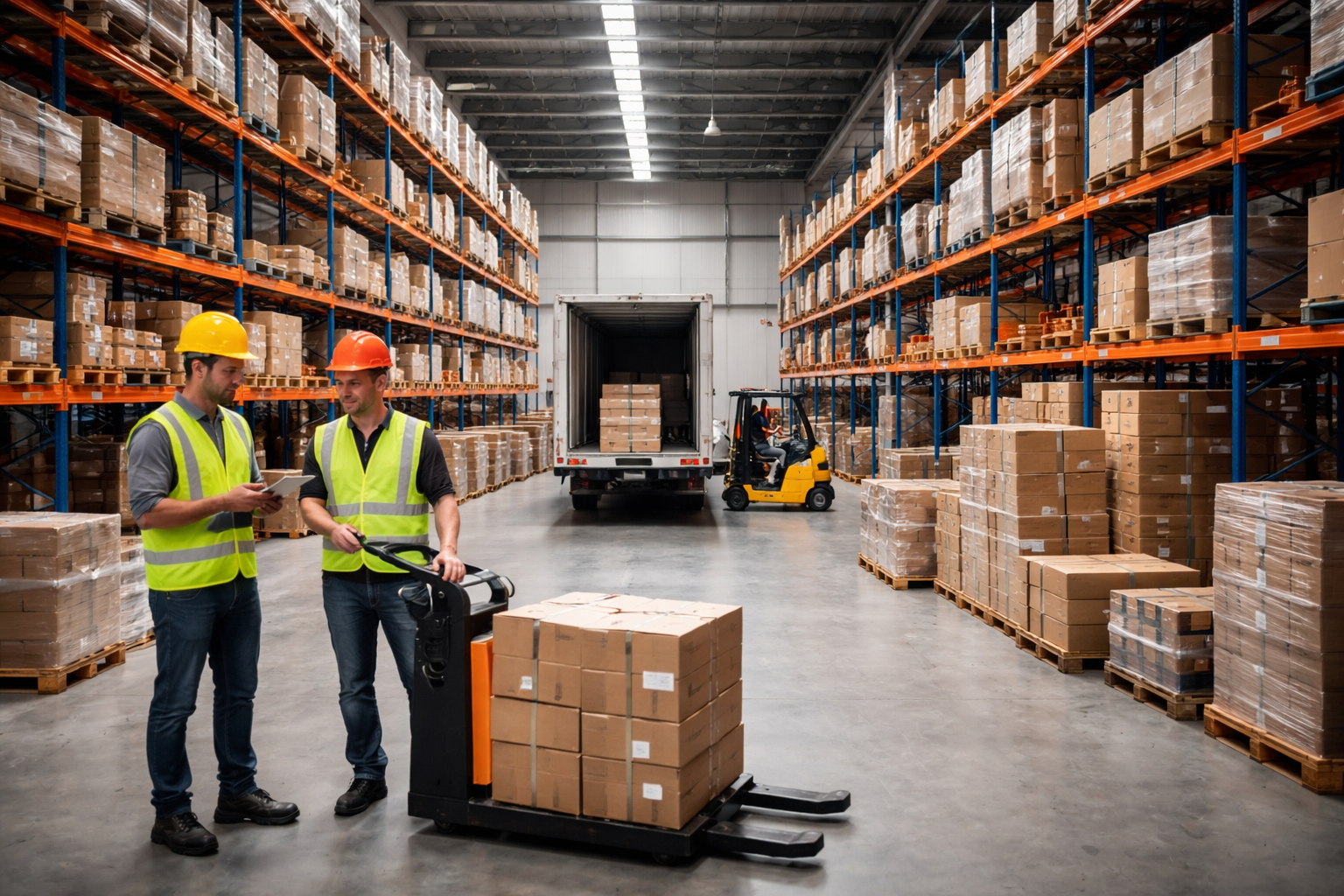
Not every product needs to sit on a shelf waiting. For goods that move fast, cross-docking — receiving inbound shipments and transferring them directly to outbound transport with minimal storage time can dramatically reduce handling costs. Professional warehousing operations in Vancouver are built for this kind of dynamic, high-throughput movement.
Technology That Gives You Actual Control
A modern Warehouse Management System (WMS) isn't a luxury it's the difference between running your supply chain and having your supply chain run you. Real-time inventory tracking, automated order processing, and accurate reporting allow you to make decisions based on what's actually happening, not on last week's spreadsheet. When your warehousing partner provides this infrastructure, you gain capabilities that would cost a fortune to build internally.
Practical Steps to Start Reducing Costs Right Now
If you're convinced that your current warehousing setup is costing you more than it should, here's a grounded starting point — not a generic checklist, but a practical sequence of questions that tend to reveal the biggest savings opportunities:
Step 2: Look at your inventory turn rate by SKU. Are certain products sitting in storage for 60+ days? If so, you're paying to store slow movers while potentially running short on fast ones. This is a warehousing and forecasting problem, and a good 3PL can help solve both.
Step 3: Calculate what you're actually paying per pallet, per week — including all handling fees, not just rent. Many businesses are shocked to find that their true cost per pallet is 30–50% higher than the base rate they agreed to.
Step 4: Ask whether your current provider offers scalable storage. If you're paying for fixed space year-round but only filling it during peak season, you're subsidizing empty rack. Flexible warehousing models let you pay for what you actually use.
Choosing the Right Partner — What to Look For Beyond the Brochure
Vancouver has no shortage of companies offering warehousing services. The challenge is finding one that genuinely understands your business and has the operational depth to deliver consistently not just at onboarding, but six months in when things get complicated.
A few things experienced operators recommend looking for: certifications matter (SQF, HACCP for food-grade, bonded licenses for imports), but so does the way a provider communicates. Do they give you real-time reporting? Can you reach a human when something goes wrong at the port on a Friday evening? Do they have their own fleet, or are they entirely dependent on third-party carriers they don't control?
Companies like AFS Trans Co. have built their reputation in Vancouver's logistics market by combining these operational capabilities with genuine responsiveness — understanding that for their clients, a missed shipment isn't just a logistical inconvenience, it's a customer relationship at risk. That combination of infrastructure and accountability is what separates a warehouse from a warehousing partner.
The conversation should also include your growth trajectory. A provider that works perfectly for your current volume may not be equipped to scale with you. The right partner proactively discusses this — they want to grow with you, not replace you in 18 months when you've outgrown their capacity.
The Bottom Line — Warehousing Is a Decision, Not Just an Expense
Here's what it really comes down to: every business in Vancouver that imports, stores, and distributes goods is making a warehousing decision — whether they know it or not. The question isn't whether to use warehousing services. The question is whether you're using them strategically enough to actually benefit from them.
The businesses that consistently outperform their competitors on logistics costs aren't doing anything magical. They've chosen partners with the right locations, the right technology, and the right operational culture. They've moved away from fixed-cost warehousing models toward flexible, scalable arrangements that match their actual demand patterns. And they treat their warehousing partner not as a vendor, but as an extension of their own operations.
If your current setup doesn't feel like that, if warehousing feels like something that happens to your supply chain rather than something that works for it, it's worth taking a serious look at what professional warehousing services in Vancouver can actually offer you. The savings are real, the operational improvements are measurable, and the competitive advantage that comes from getting this right is one of the most durable edges a business can build.
AFS Trans Co. works with businesses across the Lower Mainland and beyond to design warehousing and logistics solutions that genuinely reduce costs without compromising service. If you're ready to have that conversation, the first step is simpler than you think — it starts with an honest audit of where your supply chain is leaking money today.