There is something quietly thrilling about watching an industry reinvent itself in real time. If you have spent any time close to the trucking world, you already feel it. The roads look different. The conversations at dispatch offices sound different. Even the anxieties have shifted. Drivers, fleet owners, shippers, and warehouse managers are all asking versions of the same question: What does freight actually look like from here?
2026 is not some distant horizon anymore. It is right now, and the forces reshaping how goods move across the country have stopped being theoretical. They are operational. They are showing up on balance sheets. They are making some carriers nervous and giving others the chance of a lifetime.
This piece is for anyone trying to make sense of it all. Whether you run a small regional carrier, manage procurement for a mid-size manufacturer, or you are just trying to understand why your shipping costs have been doing what they have been doing, there is something here worth your time.
The Forces Behind the Freight Shift
Let us start with the big picture, because understanding why things are changing makes the individual trends a lot more legible.
For most of the last century, the basic equation of trucking was remarkably stable: a driver, a truck, a load, a route. The complexity lived around the edges, in regulations, fuel prices, labor negotiations. The core model itself? Relatively unchanged.
What is happening now is different in kind, not just degree. Three forces are hitting simultaneously: a technology wave that is finally mature enough to change daily operations, a driver workforce that is aging faster than it is being replaced, and a customer base that has been permanently trained by e-commerce to expect speed, visibility, and precision.
None of these trends are new in isolation. What is new is that they are all cresting at the same time.
Real-Time Visibility Has Stopped Being Optional
Five years ago, offering real-time shipment tracking was a competitive differentiator. Today, shippers treat it like they treat electric power: not something they brag about having, just something they expect to be on.
The shift here is not just about GPS pings. The visibility that serious shippers now demand goes much deeper. They want data on temperature ranges for sensitive loads, dwell times at specific facilities, predictive ETAs that account for traffic and weather, and exceptions flagged automatically before they become problems.
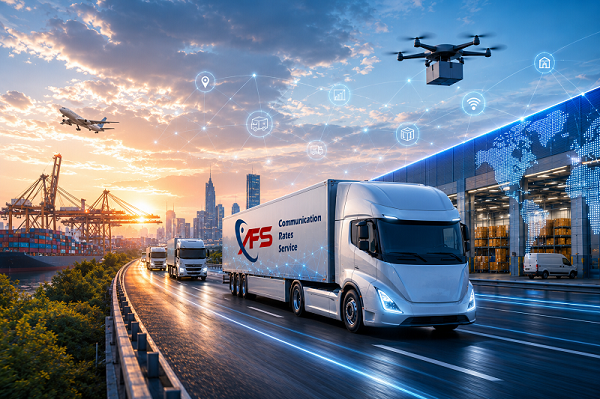
Modern Logistics Trucking Services that are growing their book of business right now have invested heavily in telematics platforms that talk to their customers' supply chain systems. The integration is no longer optional. If your TMS cannot share data with your shipper's ERP, you are already behind.
What makes this particularly interesting is what it does to relationships. When your customer can see exactly where their freight is at any given moment, and when that data is accurate and clean, trust compounds quickly. Visibility is not just a feature. It is a relationship accelerator.
Electric Trucks: Not Hype, Not Quite Here Either
Let us be honest about where electric vehicles actually stand in long-haul freight, because the coverage tends to veer between breathless optimism and dismissive skepticism.
The truth is somewhere more interesting. Class 8 electric trucks are real, they are being deployed, and the economics are improving faster than many legacy carriers expected. But range limitations, charging infrastructure gaps, and upfront capital costs mean that full electrification of long-haul routes is still years away for most operations.
Where things are genuinely moving right now is in regional and last-mile delivery. Urban drayage. Short-haul runs under 200 miles where a driver starts and ends at the same terminal. In these lanes, the math is starting to work.
Companies like AFS Trans Co. that operate regional corridors are already running pilot electric fleets on specific routes and building the institutional knowledge that will matter enormously as the technology matures. The carriers who wait until the infrastructure is fully built out to start learning will find themselves in a very uncomfortable position.
The strategic question is not "should we go electric?" It is “in which lanes and on what timeline does electric make operational and financial sense for our specific fleet?”
Autonomous and Driver-Assist Technology
Fully driverless trucks on public highways, at commercial scale, is not a 2026 story. That conversation is real, but the timeline has proven more complicated than the early boosters suggested.
What is a 2026 story is the rapid deployment of advanced driver-assist systems that are changing what it means to drive a truck. Lane-keeping, adaptive cruise control, automatic emergency braking, blind-spot monitoring, and fatigue detection systems are all filtering down from premium fleets into mainstream operations.
The impact on safety is meaningful and already measurable. The impact on driver retention is something not enough people are talking about. Drivers are human beings, and spending ten hours a day in a vehicle with modern safety systems is genuinely less exhausting and less stressful than doing it without them. That matters for attracting and keeping good people in a labor market that has been consistently challenging.
For shippers evaluating Logistics Trucking Services providers, asking about technology investments is no longer just about efficiency. It is a reasonable proxy for how a carrier thinks about the long game.
The Data Layer Running Under Everything
Here is something that does not get enough attention in conversations about freight technology: the competitive advantage in trucking is increasingly about data, not just equipment.
Which lanes are consistently profitable? Which shippers have loading practices that blow up your driver's day? Which routes have seasonal patterns that affect empty miles? Where is your preventive maintenance program generating savings versus where is it being neglected?
The carriers answering these questions with data, not instinct, are making better decisions across the board. They are pricing more accurately, planning more efficiently, and having better conversations with their customers about mutual improvement.
This is part of what modern Logistics Trucking Services actually deliver. Not just a truck to move freight, but a data-informed partner that can help shippers understand where their supply chains are creating friction and cost.
The technology to do this is not science fiction. It is available right now. The challenge is cultural: building organizations that actually use the data they collect, and building customer relationships mature enough to share it.
What Shippers Actually Want Right Now
Pull back from the technology conversation for a moment and ask a simpler question: what do the people paying for freight actually care about most in 2026?
The answer you get when you really talk to them might surprise you with its simplicity. They want reliability. Not the cheapest rate (though that matters). Not the flashiest technology (though they appreciate it). Reliability: freight that shows up when it is supposed to, with the right paperwork, in the right condition, with accurate information throughout the journey.
Everything else, the visibility platforms, the driver-assist technology, the data integrations, ultimately exists in service of that simple promise. A shipment that arrives as expected, without drama.
This is worth keeping in mind when evaluating where to invest. The carriers that are winning in 2026 are not necessarily the ones with the newest trucks or the most sophisticated apps. They are the ones who have built cultures and processes around delivering on commitments, consistently, at scale.
AFS Trans Co. understands this at an operational level. The company has built its reputation not on marketing promises but on service consistency, the kind of thing that shows up in renewal rates and referrals rather than press releases.
Sustainability Is Moving From Preference to Requirement
For a while, sustainability in shipping felt like a box to check on an ESG presentation. That phase is ending.
Large enterprise shippers with their own sustainability commitments are increasingly requiring their logistics partners to report emissions data and show progress on reduction targets. This is not a trend. It is a structural shift in procurement criteria.
For trucking companies, this creates both pressure and opportunity. The pressure is obvious: you need to measure and reduce your carbon footprint, or you risk losing RFPs you would otherwise have won. The opportunity is that carriers who get ahead of this can differentiate meaningfully with a growing segment of environmentally committed shippers.
Route optimization software that reduces empty miles, right-sizing trailers to avoid running light, driver coaching programs focused on fuel-efficient behaviors, investments in aerodynamic equipment: these all contribute to a measurable emissions story. The carriers building that story now are positioning themselves well.
The Human Side of a Changing Industry
It would be incomplete to talk about the future of freight without talking about drivers. Not as a "human interest" sidebar, but as the central operational reality that shapes everything else.
The median age of a commercial truck driver in the U.S. continues to climb. Recruiting into the profession remains difficult. Retention is a genuine competitive advantage for carriers who have figured it out.
The carriers winning on driver experience in 2026 are doing a few things consistently well. They are investing in equipment quality, not expecting drivers to do their best work in trucks that are poorly maintained or uncomfortable. They are communicating clearly about home time expectations and actually honoring them. They are using technology to reduce administrative friction, the paperwork and logging overhead that adds time to a driver's day without adding to their paycheck.
And they are treating drivers as professionals, which sounds obvious but is apparently not universal practice.
This human dimension is ultimately what makes Logistics Trucking Services work or not work. The technology, the data, the electric vehicles, the sustainability reporting: all of it runs on the skill and reliability of the people behind the wheel.
Where This Is All Heading
The freight industry in 2026 is at one of those genuinely interesting inflection points where the companies that are curious, adaptive, and willing to invest in the right things will build durable competitive positions. And the companies that are managing quarterly costs without a longer view will find themselves squeezed from multiple directions.
There is not a single trend here that is optional in the long run. Visibility, sustainability, driver experience, data capability, technology investment: these are the table stakes of the next decade. The question is the sequencing and the pace.
For shippers, the practical takeaway is to be more deliberate about choosing partners with futures. Not just who has the best rate today, but who is building something worth betting on.
For carriers, the practical takeaway is that the complexity of this moment is also its gift. There has not been this much opportunity to differentiate in a generation. The companies willing to do the hard internal work of building better operations will find that customers notice, and remember.
The road ahead is genuinely different. That is not a reason for anxiety. It is a reason to pay attention.