Returns used to be the part of the business nobody wanted to talk about. A damaged box shoved into a back warehouse corner, a customer service rep apologizing on the phone, a spreadsheet nobody updated for weeks. Fast forward to 2026, and that quiet, neglected corner of operations has turned into one of the most closely watched line items on a company's balance sheet.
Why the sudden attention? Online shopping habits never really slowed down after the pandemic years, and with them came return rates that some retail categories now report north of 20%. Add tightening environmental regulations, rising freight costs, and customers who expect refunds within days rather than weeks, and you get a perfect storm. Businesses that once treated returns as a cost of doing business are now realizing they're sitting on a goldmine of recoverable value, if only they manage it right.
That's where the conversation naturally turns toward smarter, more strategic handling of the reverse flow of goods. It's not just about shipping something back anymore. It's about doing it in a way that protects margins, keeps customers happy, and supports a company's sustainability promises all at once.
Why Returns Are Becoming a Boardroom Issue in 2026
A decade ago, returns management sat firmly in the operations department, far from the eyes of executives. Today, it's a different story entirely. Finance teams want to know how much money is tied up in returned inventory sitting idle. Sustainability officers want proof that products aren't simply ending up in landfills. Customer experience leads want faster refund turnaround because slow refunds are one of the top reasons shoppers abandon a brand altogether.
This shift in attention isn't happening in a vacuum. Consumers have grown more comfortable buying online and trying things at home before deciding whether to keep them, a behavior pattern that's especially common in fashion, footwear, and electronics. Every one of those "try and decide" purchases creates a potential reverse shipment. Multiply that across millions of orders a year, and the financial stakes become impossible to ignore.
There's also a quieter, more emotional layer to this. Customers remember how a brand treats them when something goes wrong. A smooth, painless return experience builds trust in a way that a flawless first purchase sometimes can't. People talk about bad return experiences far more than they talk about good ones, which means a poorly handled reverse process can quietly chip away at brand loyalty long before anyone notices the damage in the numbers.
How Reverse Logistics Management Services Work in 2026
So what exactly happens once a customer clicks "request a return," and why does the process matter so much to overall supply chain health?
At its core, this function covers everything that happens after a product leaves the customer's hands and starts its journey back into the business. That includes pickup or drop-off coordination, transportation, inspection, sorting, refurbishment or repair, restocking, recycling, or in some cases, responsible disposal. Done well, it turns what looks like a loss into a recovered asset.
Companies offering Reverse Logistics Management Services in 2026 are leaning heavily on automation and predictive analytics to make this entire chain faster and far more transparent. Instead of returned goods sitting in a warehouse for weeks waiting for someone to make a decision, modern systems can flag an item's condition within hours of arrival and route it automatically toward resale, refurbishment, or recycling. This kind of speed didn't exist at scale even five years ago.
What makes this area genuinely interesting is how much it touches every other part of the supply chain. A delay in processing returns affects inventory accuracy, which affects demand forecasting, which affects purchasing decisions further upstream. One weak link and the ripple effects spread fast. That's exactly why more companies are choosing to outsource this function to specialists who live and breathe reverse flow logistics every single day, rather than trying to bolt it onto an already stretched forward-logistics team.
Cutting Costs Without Cutting Corners
Let's talk numbers for a moment, because that's ultimately what keeps executives awake at night. Industry estimates suggest that returns processing can cost businesses anywhere from 20% to 65% of the original product's price, depending on the category and how efficiently the process runs. That's a staggering range, and the difference between the low end and the high end almost always comes down to how organized the reverse process is.
A well-run reverse operation reduces waste in several concrete ways:
- Faster grading and inspection means products reach resale channels while they still hold value, instead of depreciating in a warehouse.
- Centralized return centers reduce unnecessary cross-country shipping, cutting fuel costs and carbon output.
- Better data collection on why products are returned helps companies fix design or sizing issues before they generate even more returns.
- Refurbishment programs extend product life cycles, turning what would have been a write-off into a second sale.
None of this happens by accident. It requires the right mix of trained staff, the right technology, and a genuine commitment to treating the reverse process as seriously as the forward one. This is precisely the gap that dedicated Reverse Logistics Management Services providers are stepping in to fill, bringing specialized warehousing, sorting technology, and carrier networks that most individual businesses simply can't justify building in-house.
Technology Trends Shaping Returns in 2026
Artificial intelligence has quietly become the backbone of modern returns processing. Computer vision systems now inspect returned items for damage faster and more consistently than a tired warehouse worker at the end of a long shift ever could. Machine learning models predict which items are likely to be returned before they even ship, allowing retailers to adjust sizing charts, product descriptions, or packaging in advance.
Real-time tracking has also become the norm rather than the exception. Customers in 2026 expect to see exactly where their returned package is, just as they would with an outbound delivery. That visibility builds trust and reduces the anxious "did they even get my return" customer service calls that used to flood support lines.
Robotics in sorting facilities is another area worth watching closely. Automated sortation systems can process thousands of returned items per hour, separating them by condition, destination, and disposition method. This isn't science fiction anymore. It's standard practice at facilities run by companies that specialize in Reverse Logistics Management Services, and it's part of the reason turnaround times have shrunk so dramatically over the past couple of years.
Sustainability and the Circular Economy Angle
There's a deeper, more human reason this topic matters beyond spreadsheets and quarterly earnings calls. Every product that gets refurbished instead of trashed is a small win against the mountain of waste that retail generates every year. Consumers, especially younger ones, are paying close attention to whether the brands they buy from actually walk the talk on sustainability.
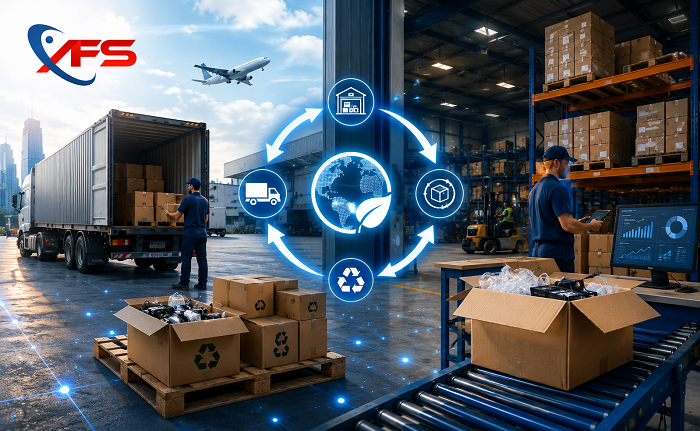
Strong reverse processes support what's often called the circular economy, where products and materials get reused, repaired, or recycled rather than discarded after a single use. A pair of returned sneakers that gets cleaned and resold, a smartphone that gets refurbished and shipped to a secondary market, a piece of furniture that gets repaired instead of landfilled. These aren't just feel-good stories. They represent real revenue recovery and real environmental impact rolled into one.
Reverse Logistics Management Services providers that build sustainability into their core process, rather than treating it as an afterthought, are increasingly the ones winning long-term contracts with major retailers. It's not just good ethics anymore. It's good business strategy.
Choosing the Right Partner for Reverse Operations
Not every provider in this space operates at the same level, and choosing the wrong one can undo a lot of the benefits described above. Businesses evaluating a partner should look closely at a few things: how transparent the tracking and reporting systems are, how flexible the network is across different regions, how quickly items move from receipt to disposition, and whether the provider has genuine experience handling the specific product category in question.
AFS Trans Co. is one example of a company that has built its reputation around exactly this kind of specialized handling, combining regional transportation expertise with returns processing that focuses on speed, accuracy, and minimizing waste at every step. Working with a partner that understands both the logistics side and the customer experience side tends to produce far better long-term results than treating returns as an afterthought bolted onto an existing freight contract.
The right partnership doesn't just save money. It frees internal teams to focus on growth instead of constantly putting out fires caused by a backlog of unprocessed returns.
Final Thoughts
The way a business handles a return says almost as much about its values and competence as the way it handles a sale. In 2026, that quiet back corner of the warehouse has moved squarely into the spotlight, and for good reason. Companies that invest in smarter, faster, more transparent reverse operations are not just saving money. They're building trust with customers, reducing their environmental footprint, and creating a supply chain that bends without breaking under pressure.
Returns aren't going away. If anything, they're becoming a bigger part of how commerce works every year. The businesses that treat this reality as an opportunity rather than a burden are the ones that will come out ahead, not just this year, but for years to come.
Frequently Asked Questions
Everything you need to know about reverse logistics management.