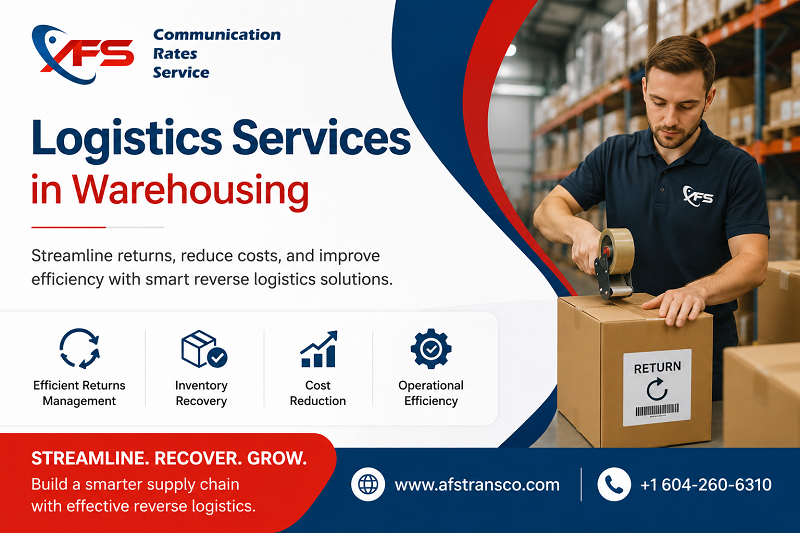
Quick Answer: Reverse Logistics Services in Warehousing manage the flow of returned, damaged, or excess goods back through the supply chain for resale, repair, recycling, or disposal. They matter because they cut waste, recover product value, and keep customer trust intact. Without them, businesses lose money on returns they never manage properly, and warehouses become bottlenecks instead of solutions.
Introduction
Nobody talks about returns at the dinner table. It's not glamorous. Nobody brags about how efficiently their warehouse handled a pallet of damaged inventory or a batch of customer returns from a holiday sale gone sideways. But ask any warehouse manager who's lived through a returns season without a real plan, and you'll hear a different story. One with a little exhaustion in it. One with numbers that didn't add up and shelves that filled faster than anyone expected.
That's the quiet truth about modern supply chains. The forward flow, getting products from factory to shelf to doorstep, gets all the attention. Meanwhile, the reverse flow, the stuff coming back, sits in the shadows, underfunded and under-planned, until it becomes a crisis. And it always becomes a crisis eventually, because ecommerce has changed what customers expect. They order more, they return more, and they expect it to be painless on their end even if it's chaos on yours.
This is where warehousing operations either prove their worth or fall apart. And it's exactly why so many companies are rethinking how they handle the goods that come back into the system.
What Exactly Falls Under Reverse Logistics
Before going further, it helps to define the scope. Reverse logistics isn't just "returns." It covers a wider range of activities than most people assume, including:
- Customer returns from online or in-store purchases
- Repairs and refurbishments sent back for servicing
- Recalls, whether voluntary or regulatory
- End-of-life product recycling and disposal
- Packaging returns, especially reusable containers and pallets
- Overstock and unsold inventory being redirected
Each of these paths requires different handling, different documentation, and often, different physical space inside a warehouse. That's a lot to juggle, and it's why generic warehousing setups often struggle when reverse flows pile up unexpectedly.
Why Reverse Logistics Services in Warehousing Matter More Than Ever
Here's the part that tends to surprise people outside the industry. Reverse logistics isn't a side task anymore. It's a core function that touches profitability, sustainability, and customer loyalty all at once.
Consider the financial angle first. A product sitting unprocessed in a warehouse corner isn't just taking up space, it's actively losing value every single day. Electronics depreciate. Seasonal apparel becomes unsellable once the season passes. Even simple household goods lose their appeal if they sit too long without being inspected, restocked, or resold. Efficient Reverse Logistics Services in Warehousing exist precisely to prevent this slow bleed of value. They create a system where returned goods get triaged quickly: resell as-is, refurbish, liquidate, or recycle, rather than gathering dust while decisions get postponed.
Then there's the sustainability piece, which honestly doesn't get discussed enough. Every item that gets refurbished instead of thrown away is one less thing in a landfill. Every packaging material that gets reused instead of discarded chips away at a company's environmental footprint. Customers notice this too, more than businesses sometimes give them credit for. People increasingly choose brands that seem to actually care about waste, not just claim to.
And finally, there's trust. When a customer returns something and the process feels smooth, refund processed quickly, replacement shipped without drama, that experience sticks with them. It's often the difference between a one-time buyer and someone who comes back. A clunky, slow, confusing returns process does the opposite. It plants doubt. It makes people hesitate before ordering again.
The Real Cost of Ignoring Reverse Flows
Let's be honest about what happens when reverse logistics gets treated as an afterthought. Warehouse floor space fills up with unprocessed returns. Staff scramble to sort items without a clear system, which slows everything down and increases the risk of mistakes. Inventory records get messy because nobody's quite sure what's sellable and what isn't. And customers, waiting on refunds or replacements, start losing patience.
It's a slow unraveling, not a dramatic collapse. That's what makes it dangerous. Businesses often don't notice the damage until quarterly numbers come in lower than expected, or until a customer survey reveals frustration nobody saw coming.
This is precisely why more companies are turning to dedicated Reverse Logistics Services in Warehousing rather than trying to bolt reverse processes onto systems built only for outbound shipping. The two flows require different thinking, different layouts, and honestly, different mindsets from the teams running them.
Building a System That Actually Works
So what does a strong reverse logistics setup look like in practice? A few things tend to separate the operations that handle returns well from the ones that struggle.
First, speed of inspection matters enormously. The faster a returned item gets assessed, whether it needs repair, can be resold, or should be scrapped, the faster it can generate value again instead of sitting idle. Warehouses that build inspection into their earliest workflow steps, rather than treating it as a final afterthought, consistently perform better.
Second, clear categorization pathways help avoid confusion. Items shouldn't just land in a generic "returns" pile. They should move immediately into defined tracks: resale-ready, needs minor repair, needs major refurbishment, or disposal. This kind of structure sounds simple, but it's often missing in warehouses that never planned specifically for reverse flows.
Third, technology plays a bigger role than people expect. Barcode scanning, inventory management software, and real-time tracking systems allow teams to know exactly what's coming back, in what condition, and where it needs to go next. Without this visibility, reverse logistics becomes guesswork, and guesswork is expensive.
Fourth, and this one gets overlooked constantly, communication with customers during the return process shapes their entire perception of the brand. A simple tracking update or a quick confirmation email costs almost nothing to send but does wonders for reducing anxiety on the customer's end.
Companies like AFS Trans Co. have built their approach around exactly these principles, treating reverse logistics not as a necessary evil but as an operational strength that can actually differentiate a business from its competitors. When warehousing partners understand that returns processing deserves the same rigor as outbound fulfillment, the entire supply chain becomes more resilient.
Reverse Logistics as a Competitive Advantage
It's worth pausing on this idea because it flips the usual thinking. Most businesses view returns as a cost center, something to minimize and tolerate. But there's a strong argument that reverse logistics, handled well, becomes a genuine competitive edge.
Think about it from a customer's perspective. If two companies sell similar products at similar prices, but one has a reputation for painless returns and the other doesn't, which one earns repeat business? The answer is obvious. Reverse Logistics Services in Warehousing that prioritize speed and clarity aren't just operational nice-to-haves anymore. They're becoming a deciding factor in where customers choose to spend their money.
There's also a resale and secondary market angle that's growing fast. Refurbished electronics, resold apparel, and recovered inventory now represent legitimate revenue streams for many businesses, not just waste management. Warehouses equipped to handle this properly can turn what used to be a loss into a modest profit center, or at minimum, a much smaller loss than before.
Where Warehousing Fits Into the Bigger Supply Chain Picture
Supply chains today stretch across countries, vendors, and delivery networks that would have seemed impossibly complex a couple of decades ago. Within that complexity, warehouses serve as the connective tissue, the place where forward and reverse flows actually meet and get sorted out.
A warehouse that only knows how to send things out, without a solid plan for receiving things back, is only doing half its job. Modern supply chains demand both directions be handled with equal seriousness. That's not a trend that's going away. If anything, as ecommerce continues expanding and customer expectations keep rising, the reverse side of logistics will only grow more important, not less.
Conclusion
Returns will never be the exciting part of running a business. Nobody's writing case studies celebrating a particularly smooth pallet of refurbished goods. But the businesses that quietly get this right, the ones that treat their reverse flows with the same care as their outbound shipments, tend to hold onto customers longer, waste less money, and run tighter operations overall.
That's really the heart of it. Reverse Logistics Services in Warehousing aren't some niche operational detail buried in a supply chain diagram. They're a real, tangible part of what keeps modern commerce functioning smoothly, one returned box, one refurbished item, one recycled package at a time. Companies that invest in getting this right, whether building internal capability or partnering with experienced providers like AFS Trans Co., put themselves in a stronger position for whatever the next shift in customer behavior brings.
Frequently Asked Questions
Everything you need to know about our warehouse & 3PL services.