If you've spent any time running a business that moves goods across this country, you already know that gut feeling. The one that hits when a shipment is delayed, a driver calls in unavailable, or a trade policy shifts overnight and suddenly your whole cost model needs rethinking. It's stressful. And in 2026, those gut-punch moments are happening more often, not less.
The supply chain in Canada has never been simple. From the sheer geography of the country to the weather-related disruptions that shut down corridors for days at a time, Canadian logistics operators and the businesses that depend on them have always had to be tough. But the last few years have layered on new complexity at a pace that is genuinely hard to keep up with.
This piece is for business owners, logistics managers, and operations leaders who want to understand exactly what is going wrong and, more importantly, what they can actually do about it. We're not interested in vague platitudes. We've pulled together real challenges and real solutions, grounded in what companies like AFS Trans Co. are seeing on the ground every single day.
The 7 Biggest Pressures Reshaping the Supply Chain in Canada Right Now
1. The Truck Driver Shortage That Refuses to Go Away
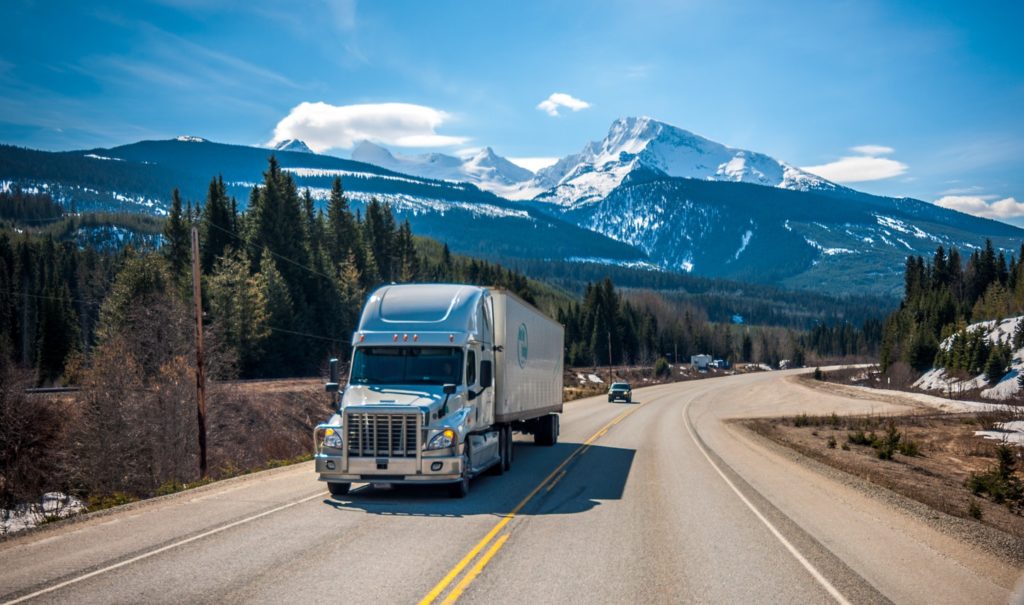
Let's start with the elephant in the room. The commercial truck driver shortage has been a topic of industry conversation for years, but in 2026 it has morphed from a concern into a genuine operational crisis for many shippers. The Canadian Trucking Alliance has consistently flagged a deficit of tens of thousands of drivers, and the pipeline of new entrants entering the profession isn't growing nearly fast enough to cover the wave of retirements hitting the industry.
What makes this especially painful is that it's not evenly distributed. Certain corridors and certain freight types are hit far harder than others. Specialized haul, cold chain, and last-mile delivery into rural areas face the steepest driver shortfalls. For businesses that rely on those lanes, capacity crunches aren't abstract. They translate directly into missed delivery windows, unhappy customers, and lost revenue.
2. Aging Infrastructure Slowing Everything Down
Canada's roads, bridges, rail lines, and port facilities were largely built for a different era. Some of the infrastructure handling today's freight volumes was designed when those volumes were a fraction of what they are now. The result is bottlenecks that cost businesses real money in dwell time, missed connections, and unpredictable transit times.
The Port of Vancouver, one of the country's most critical trade gateways, has faced congestion issues that ripple outward for weeks at a time. Inland rail terminals are similarly strained. And while federal infrastructure investment is ongoing, the pace of improvement consistently lags behind the pace of demand growth.
For shippers moving high-value or time-sensitive goods, infrastructure delays aren't just inconvenient. They can mean the difference between a profitable quarter and a damaging one.
3. Aging Infrastructure Slowing Everything Down
The Canada-U.S. trade relationship has always been the lifeblood of Canadian commerce. The two countries share the world's longest undefended border and one of the most integrated trade corridors on the planet. But in 2026, that relationship carries more uncertainty than it has in decades. Policy shifts, tariff adjustments, and evolving customs requirements have created a compliance environment that is genuinely difficult to navigate without expert guidance.
For businesses that depend on the supply chain in Canada to flow goods across the U.S. border, the stakes are high. Customs clearance delays, documentation errors, and sudden tariff changes can create cascading disruptions that far outpace the value of any individual shipment. And unlike weather delays, policy-driven disruptions often arrive with very little warning.
Key insight: Businesses with a customs broker embedded into their logistics workflow consistently experience shorter clearance times and fewer compliance penalties than those managing customs reactively.
How to Overcome It: Invest in trade compliance expertise, whether in-house or through your logistics partner. Keep your HS codes, country-of-origin documentation, and valuation records meticulously updated. Establish relationships with trusted customs brokers who work proactively, not just when problems arise. Scenario planning for tariff changes isn't paranoia in the current environment. It's basic risk management.
4. Fuel Price Volatility Squeezing Margins on Every Load
There's a reason fuel costs dominate so many conversations between shippers and carriers. Diesel prices in Canada have always been influenced by global commodity markets, currency fluctuations, and regional supply dynamics. But the volatility in recent years has been exceptional. A single significant price swing can wipe out the margin on an entire lane if it isn't accounted for in the rate structure.
For businesses negotiating freight contracts, fuel surcharges can feel like a moving target. For carriers, unpredictable fuel costs make it nearly impossible to offer stable rates without baking in substantial buffers. The result is friction across the entire contracting process and a general atmosphere of financial uncertainty that nobody loves navigating.
How to Overcome It: Negotiate contracts that include clearly defined fuel surcharge mechanisms tied to published indices. This removes the guesswork and prevents adversarial renegotiations every time prices shift. Consider fuel hedging strategies if your volumes justify it. On the operational side, optimize load consolidation to reduce the number of movements required per unit of freight, directly lowering your fuel exposure per shipment.
5. Climate and Weather Disruptions Hitting Harder Each Year
Canada's weather has always been a logistics variable. Every Canadian shipper knows about winter delays, spring flooding on prairie highways, and the seasonal closures that come with operating in a country this vast and this cold. But in 2026, those disruptions are intensifying. Atmospheric rivers in British Columbia. Extreme heat events affecting railway operations. Ice storms arriving earlier and staying longer in central and eastern Canada.
The issue is not just the frequency but the unpredictability. A supply chain built around historical seasonal patterns is increasingly caught flat-footed by events that fall outside those patterns. When a key highway closes unexpectedly for three days, every link in the chain feels it.
"Climate resilience isn't just an environmental talking point anymore. It's a supply chain strategy. The businesses that are building geographic and modal flexibility into their networks right now are the ones that will absorb weather shocks without crippling disruptions."
How to Overcome It: Develop alternate routing plans for your most critical corridors before you need them. Maintain safety stock levels that can absorb multi-day disruptions without triggering downstream shortages. Work with logistics partners that have real-time weather monitoring integrated into their dispatch operations. Incremental investments in resilience consistently outperform reactive scrambling after a disruption.
6. Technology Gaps Leaving Businesses Flying Blind
The logistics industry is in the middle of a genuine technology transformation. Real-time tracking, AI-powered route optimization, predictive analytics for demand forecasting, electronic documentation, and integrated transportation management systems are rapidly moving from competitive advantages to baseline expectations. Businesses that haven't invested in these tools are increasingly operating with less visibility, less agility, and higher costs than their competitors.
The honest truth is that technology adoption across the broader supply chain in Canada remains uneven. Many small and mid-sized shippers are still relying on spreadsheets, phone calls, and tribal knowledge to manage operations that would benefit enormously from even modest technology investment. The gap between digitally mature logistics operations and those still running manually is widening, and it shows up in service reliability, cost efficiency, and scalability.
Worth knowing: You don't need to overhaul your entire operation overnight. A phased technology adoption approach, starting with shipment visibility and moving toward predictive planning, is both manageable and effective for most businesses.
How to Overcome It: Start with visibility. Knowing where your freight is in real time costs far less than the customer service problems that come from not knowing. From there, explore TMS integrations that connect your inventory, ordering, and transportation data into a single view. Partner with logistics providers who have made technology investment a priority, because their systems will effectively extend your own capabilities without requiring full infrastructure buildouts on your end.
7. Rising Customer Expectations Colliding With Real-World Constraints
E-commerce has fundamentally changed what end customers expect from delivery. Two-day shipping, real-time tracking updates, easy returns, and last-mile flexibility have gone from differentiators to table stakes for a large portion of the Canadian consumer market. The challenge is that those expectations were largely set by logistics operations running at massive scale with infrastructure investments that most businesses simply cannot replicate.
For mid-market businesses operating across the supply chain in Canada, the tension is real. Customers want Amazon-style service, but the cost and infrastructure to deliver it at that level isn't accessible to every company. Managing that expectation gap without losing customers or destroying margins requires genuine strategic thinking rather than just trying to do everything faster and cheaper at once.
How to Overcome It: Be honest with customers about what you can deliver and then consistently over-deliver on that promise. Proactive communication beats perfect performance every time. When a shipment is running late, a well-timed notification and a clear explanation will retain the customer relationship far better than silence followed by a missed window. Consider regional micro-fulfillment strategies that bring inventory closer to dense customer clusters, reducing last-mile complexity and cost simultaneously.
The Path Forward Isn't Easy, But It Is Clear
None of these challenges are going to resolve themselves by the time 2027 rolls around. The driver shortage will continue. Weather events will keep surprising us. Trade policy will remain fluid. Technology will keep advancing, rewarding those who adopt and penalizing those who wait.
What separates businesses that thrive through this period from those that simply survive it comes down to one thing: intentionality. The companies that are building resilience deliberately, investing in relationships with their logistics partners, embracing technology at a realistic pace, and planning for disruption rather than hoping it won't come, those are the businesses that will look back on 2026 as the year they got stronger.
At AFS Trans Co., we work with businesses across Canada every day who are navigating exactly these pressures. We've seen firsthand that the solutions aren't always glamorous. Sometimes they're as straightforward as better communication, more reliable contracting, or finally investing in a tracking system that gives your team real-time answers instead of guesswork. But those incremental improvements compound into a meaningfully more resilient operation over time.
The supply chain challenges are real. So are the opportunities for businesses that approach them with clear eyes and a willingness to act. If your operation is feeling the strain of any of these pressures, the best time to start addressing them was six months ago. The second-best time is right now.
AFS Trans Co. is a Canadian logistics and transportation company helping businesses of all sizes move freight smarter, faster, and with greater confidence across Canada and into the U.S. market.