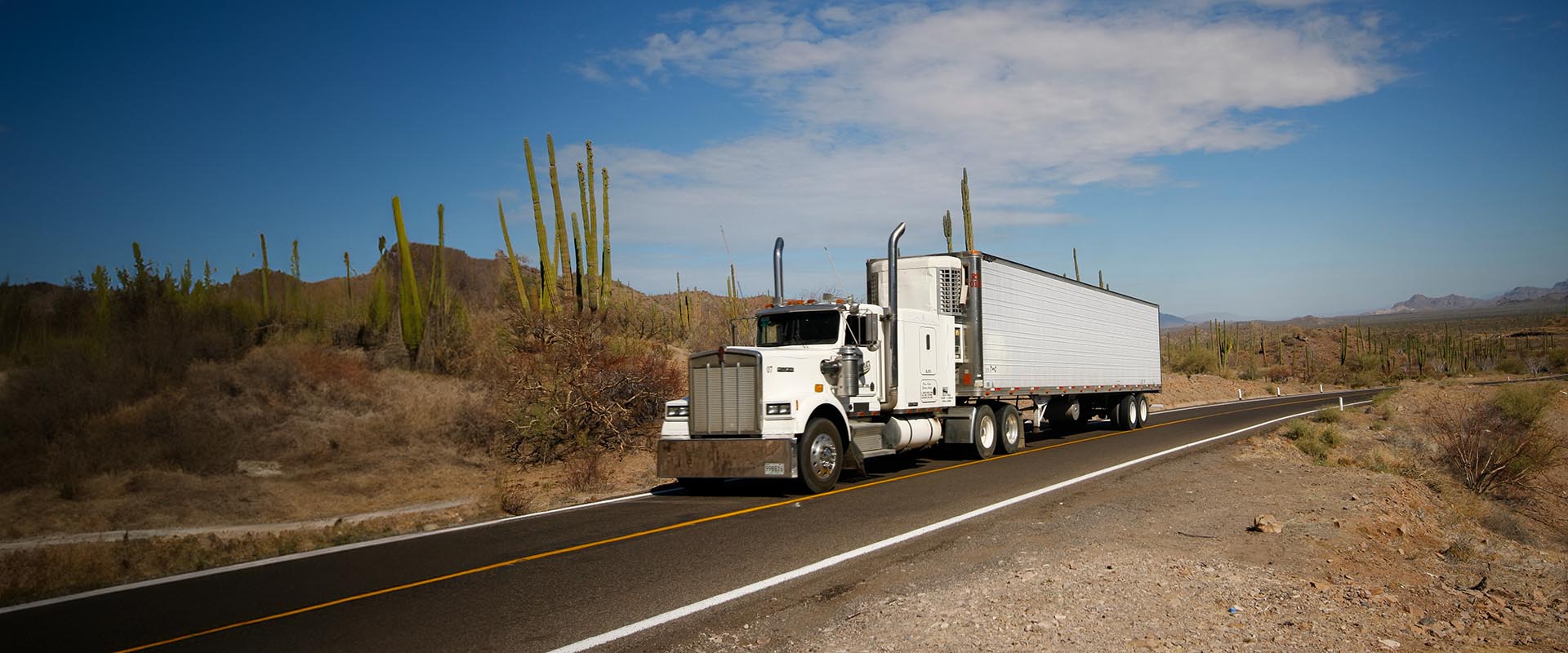
There is something quietly extraordinary about the trucking industry. While most Canadians go about their daily routines, thousands of drivers are already on the road before sunrise, hauling the goods that stock shelves, run factories, and hold the Canadian economy together. Trucking companies in Canada move nearly 68% of all domestic freight, and that number is not shrinking anytime soon. If anything, the demands placed on this industry are growing heavier by the year.
But the road ahead looks different from any road the industry has travelled before. Between the rapid spread of artificial intelligence, the relentless pressure to cut emissions, the complicated dance of cross-border trade regulations, and a workforce that is slowly but meaningfully changing, Canadian carriers are entering a chapter that will define the next decade of transportation. Some of the changes are exciting. Others are frankly uncomfortable. All of them are worth paying close attention to if you are a shipper, a fleet owner, a driver, or simply someone who depends on goods arriving where they are supposed to be.
This blog takes a clear-eyed look at the real forces shaping trucking companies in Canada right now, and what smart operators are doing to stay ahead of the curve.
The Technology Shift That Cannot Be Ignored
Artificial Intelligence and Smarter Fleet Operations
Let's be honest. For a long time, "tech adoption" in the trucking world meant buying a GPS unit and calling it innovation. That era is firmly in the rearview mirror. Trucking companies in Canada are now deploying artificial intelligence across dispatch, route planning, predictive maintenance, and freight matching in ways that would have seemed like science fiction just five years ago. AI-powered transportation management systems can now analyse traffic patterns, weather forecasts, and load data simultaneously to find the most fuel-efficient and time-effective routes for every single trip. That kind of precision was simply not possible before.
Predictive maintenance is another area where AI is making a real difference. Instead of waiting for a truck to break down on the highway at 2 AM in January somewhere outside Sudbury, Canadian fleets are now using onboard sensors and machine learning to detect mechanical stress before it becomes a costly failure. The financial case is obvious, but the human case matters too. Fewer breakdowns means fewer stranded drivers, fewer dangerous roadside situations, and more reliable delivery windows for customers who are counting on precision.
The adoption of cloud-based transportation management systems is accelerating across fleets of all sizes, not just the giants. Smaller regional trucking companies in Canada are finding that these platforms are now affordable and scalable enough to fit their operations, giving them capabilities that once required an entire IT department to maintain.
Cross-Border Trade: A Complex But Critical Opportunity
Navigating the Canada-USA Freight Corridor in a Shifting Political Climate
If you follow Canadian freight at all, you already know how much tension surrounded cross-border trade in 2025. Tariff uncertainty, shifting regulatory requirements, and the general unpredictability of trade policy created real headaches for carriers operating Canada-USA routes. Despite that turbulence, cross-border freight remains one of the most important and lucrative segments for trucking companies in Canada. The trade relationship between the two countries represents over one trillion dollars annually, and trucks carry the overwhelming majority of that commerce.
What is changing is how carriers are approaching that trade. The old model of chasing spot market rates on cross-border lanes is giving way to a much stronger emphasis on long-term shipper relationships, contractual commitments, and transparency. Shippers who experienced supply chain chaos in the past few years are no longer willing to gamble on unreliable carriers. They are choosing partners, not just vendors. That mindset shift is a significant opportunity for trucking companies in Canada that have invested in consistent service quality, real-time tracking, and proactive communication.
The opening of the Gordie Howe International Bridge is also expected to ease capacity pressure at some of the most congested border crossings between Ontario and Michigan. For carriers running dense east-west corridors, better border infrastructure means faster transit times, lower dwell costs, and improved asset utilisation. It is the kind of structural improvement the industry has needed for years, and fleets that adjust their lane strategies to capitalise on it will have a measurable edge.
The Driver Shortage: Real, Persistent, and Evolving
Retention Has Become Just as Important as Recruitment
Anyone who has spent time inside a Canadian trucking operation knows that the driver shortage is not a future problem. It has been a present, daily, urgent challenge for the better part of a decade. What changed recently is the nature of that challenge. While recruitment remains difficult, the industry has made some progress in bringing new drivers into the fold through immigration pathways, expanded training programs, and targeted outreach to underrepresented communities. The harder problem now is keeping the experienced drivers that carriers already have.
Driver retention in 2026 is driven by factors that go well beyond pay. Modern drivers, particularly younger ones entering the workforce, care deeply about their schedules, their home time, the quality of the equipment they operate, and whether they feel genuinely respected by the company they work for. Trucking companies in Canada that treat drivers as a commodity to be managed will continue losing them to competitors who treat them as professionals worth investing in. The math is not complicated. High driver turnover is extraordinarily expensive when you factor in recruitment costs, training time, and the operational disruption that comes with constantly cycling through new people.
There is also a meaningful shift happening in who is becoming a truck driver. Women now represent a growing share of new entrants to the industry. Indigenous workers, newcomers to Canada, and career-changers from other industries are all reshaping the face of the trucking workforce. Forward-thinking trucking companies in Canada are leaning into that diversity not just because it is the right thing to do, but because it is the practical answer to a very real labour gap.
Sustainability and the Green Freight Transition
The Environment Is No Longer Optional for Canadian Carriers
A few years ago, sustainability conversations in Canadian trucking circles were met with polite nods and quiet scepticism. That has changed, and the change has been faster than many people expected. Customers, regulators, and investors are all pushing trucking companies in Canada to demonstrate credible emissions reduction plans. Carbon pricing frameworks are raising operating costs for fuel-intensive fleets, which is changing the economic calculus around green investment in a very tangible way.
Electric and hydrogen-powered trucks are still in the early stages of adoption for long-haul operations, and that is honest. The range limitations, charging infrastructure gaps, and upfront capital costs remain real barriers for most Canadian carriers. But shorter regional routes are a different story. Urban delivery and short-haul operations are increasingly viable for zero-emission vehicles, and several major trucking companies have already begun integrating electric trucks into their city fleets.
What is perhaps more immediately impactful than vehicle electrification is the broader push for operational efficiency. Aerodynamic trailer modifications, advanced telematics for engine monitoring, route optimisation that minimises empty miles, and rigorous preventive maintenance programs are all contributing to meaningful fuel savings right now. These are not futuristic solutions. They are practical, available, and paying off for carriers who take them seriously. The industry's average 22% empty mile rate represents an enormous opportunity for improvement, and companies that chip away at that number are cutting emissions and costs simultaneously.
Market Growth and the Opportunity Ahead
Despite all the headwinds, the financial outlook for trucking companies in Canada is genuinely encouraging. Canada's road freight transport market is projected to grow from roughly $42 billion in 2025 to over $43 billion in 2026, with forecasts pointing toward $54 billion by 2031. E-commerce continues to drive demand for faster, more frequent deliveries. Infrastructure investment by the federal government in highway upgrades, port expansions, and border improvements is adding capacity across the network. Sectors like construction, manufacturing, healthcare, and food logistics all require reliable truck freight, and none of those industries are going anywhere.
The LTL (less-than-truckload) segment in particular is seeing accelerated growth as shippers lean toward smaller, more frequent shipments rather than large consolidated loads. That shift rewards carriers with sophisticated network design and strong technology platforms. For trucking companies in Canada that have invested in those capabilities, the market is offering real opportunities to grow profitably rather than simply compete on price.
Conclusion: The Industry That Keeps Canada Moving
There is no version of a functioning Canadian economy that does not depend heavily on its trucking companies. Whether it is fresh produce making its way from farms in British Columbia to grocery stores in Ontario, auto parts crossing the border from Michigan to assembly plants in Windsor, or construction materials arriving at job sites from coast to coast, trucks are the thread that holds the supply chain together.
The years ahead will demand more from trucking companies in Canada than ever before. More technological agility. More environmental accountability. More genuine investment in the people who actually drive the trucks. More strategic thinking about cross-border trade and long-term shipper relationships. More operational efficiency when margins are already razor thin.
But this is also an industry that has proven, again and again, that it can adapt. The same resilience that kept Canadian fleets moving through a global pandemic, through supply chain chaos, through driver shortages and tariff uncertainty, is the same resilience that will carry the industry into a stronger and more sustainable future. For businesses that rely on freight, for drivers who have built careers on the road, and for the Canadian economy that depends on both of them, the journey is far from over. If anything, the most important miles are still ahead.