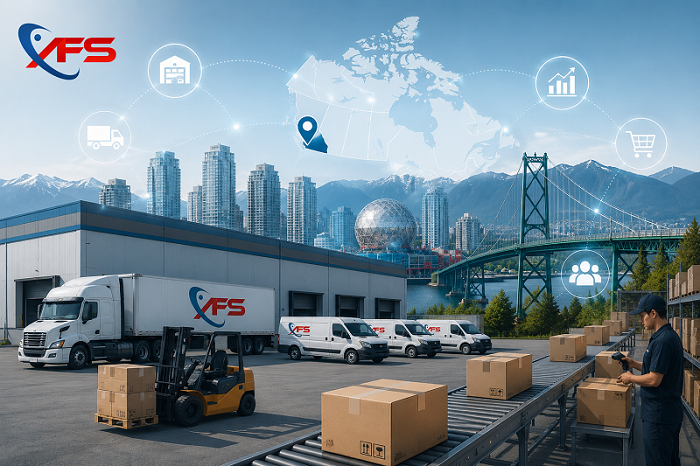
If you've been running an e-commerce brand or growing a product-based business in Canada, you've probably hit that wall. The one where packing boxes in your garage stops being charming and starts costing you sleep, money, and customers. Vancouver, sitting at the crossroads of Pacific trade routes and North American supply chains, has quietly become one of the most strategic locations in the country to outsource your fulfillment. And yet, a lot of business owners still aren't sure what a third-party logistics provider actually does, how it differs from just renting a warehouse, or whether it's the right call for their operation.
This post is going to walk you through all of it, plainly and practically.
What Is a 3PL, and Why Vancouver?
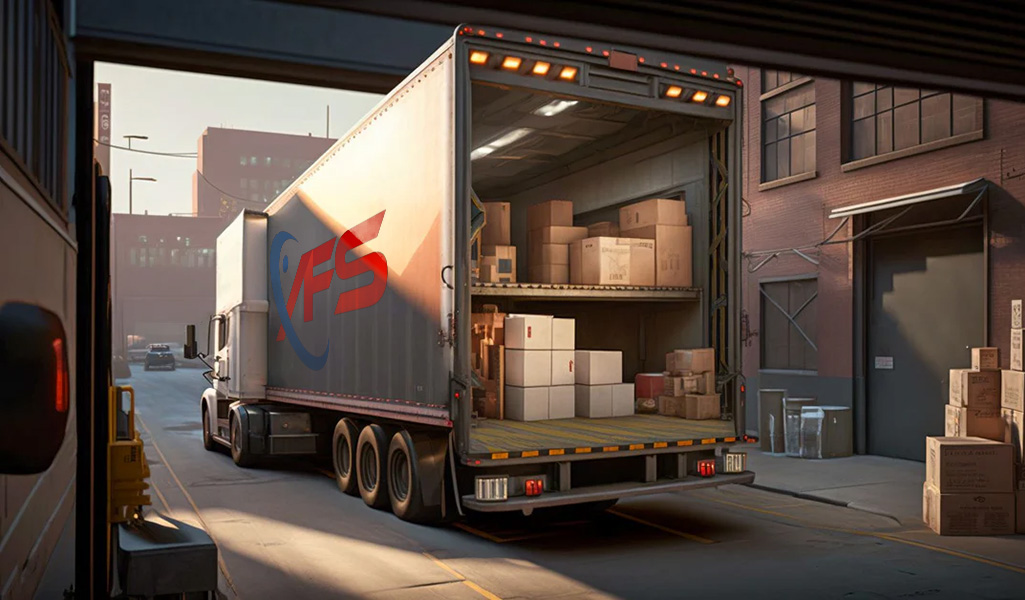
A third-party logistics provider, or 3PL, is a company that handles the physical side of your supply chain on your behalf. That means receiving inventory from your suppliers, storing it, picking and packing individual orders, and shipping them out to your customers. You keep running your business. They keep the shelves organized and the parcels moving.
Now, why Vancouver specifically? Geography matters more than people give it credit for in logistics. Vancouver's port, the Port of Metro Vancouver, is the largest in Canada and one of the busiest in North America. Goods arriving from Asia, including electronics, textiles, furniture, and consumer products, land here first. If your supply chain starts overseas, positioning your inventory in Vancouver dramatically reduces the time and cost between the factory and your customer's front door.
Beyond the port, Vancouver sits close to the U.S. border, giving businesses a dual advantage: efficient access to Canadian customers from coast to coast and a relatively short cross-border reach into the Pacific Northwest markets. For businesses that sell both domestically and into the United States, this position is genuinely hard to beat.
What Happens Inside a Fulfillment Center?
Walking through a fulfillment center for the first time is either thrilling or overwhelming, depending on your personality. There's a rhythm to it that isn't obvious from the outside.
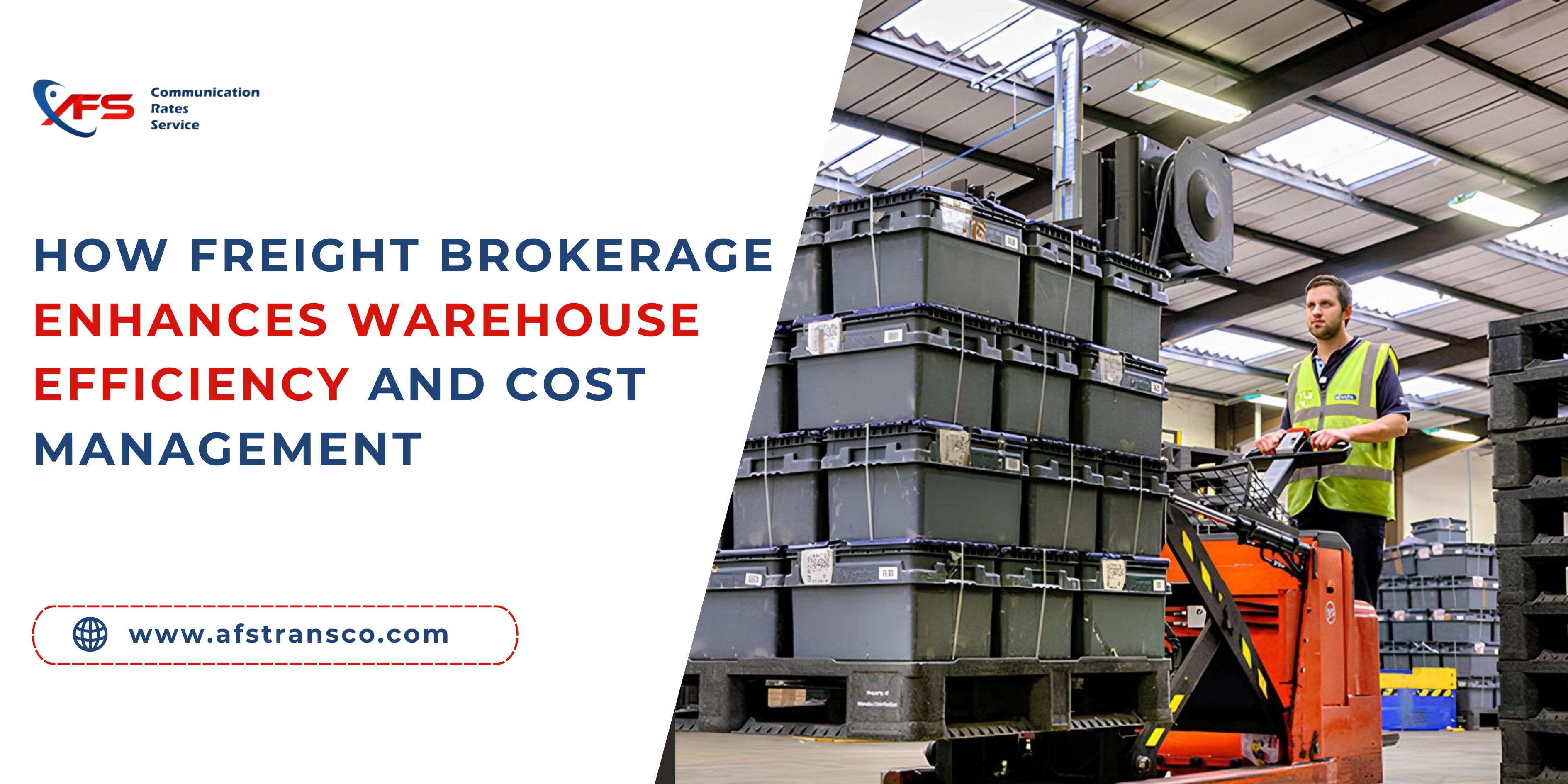
Receiving: When your supplier ships a container or pallet to the 3PL warehouse, the team inspects the goods, counts the units, checks for damage, and logs everything into the warehouse management system. This step matters more than most business owners realize. Accurate receiving is the foundation of accurate inventory.
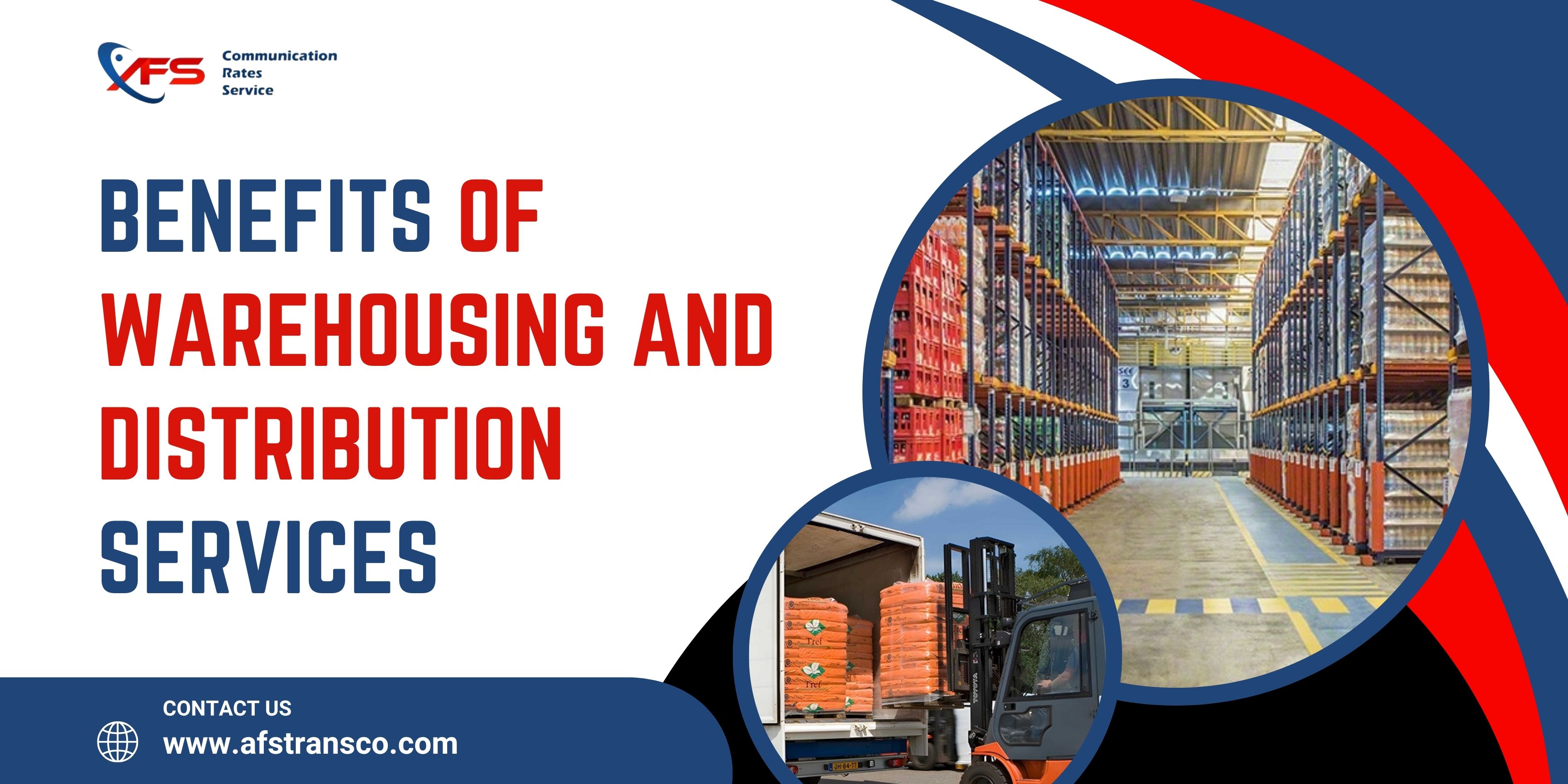
Storage: Your products are then assigned bin locations, shelves, or pallet positions based on their size, weight, and how frequently they turn over. High-velocity items get placed closer to packing stations. It sounds simple, but the logic behind it saves minutes per order, and those minutes add up to real money at scale.
Order Processing: When a customer places an order on your store, the 3PL's system pulls that order data, often in real time through integrations with Shopify, WooCommerce, Amazon, or whatever platform you're using. A picker walks the warehouse floor collecting the right items, or in larger operations, conveyor systems and scanning technology do the heavy lifting.
Packing: Orders are packed according to your specifications. You can usually provide branded packaging, specific inserts, custom tissue paper, thank-you cards, or whatever else makes your unboxing experience feel intentional. Good 3PLs understand that packaging is part of your brand, not just a box.
Shipping: Once packed, orders get labeled and handed off to carriers. A strong Vancouver-based 3PL will have negotiated shipping rates with Canada Post, Purolator, UPS, FedEx, and other carriers that individual small businesses simply can't access on their own. That rate difference alone often partially offsets the cost of outsourcing.
Returns Processing: The reverse logistics side is often overlooked when businesses first think about 3PLs. When a customer sends something back, the fulfillment center receives it, inspects the condition, and either restocks it, sets it aside for your review, or flags it for disposal. Clean returns management protects your inventory accuracy and your cash flow.
The Real Advantage: It's Not Just About Space
A lot of people assume the main reason to use a fulfillment center is that they've run out of room. That's sometimes true, but it's a narrow way to think about it.
The deeper value is operational bandwidth. When you're not personally managing inventory, packing orders, dealing with carrier pickups, or sorting through returns, you reclaim hours every week. Those hours go back into product development, customer relationships, marketing, hiring, or whatever your business actually needs from you right now.
There's also the scalability factor. If you have a product that spikes during the holidays, or you're about to run a campaign that you expect to triple your order volume for two weeks, a fulfillment center absorbs that spike without you scrambling to hire temporary workers, rent extra space, or pull your team off their regular responsibilities. You pay for what you use, and the capacity is already there.
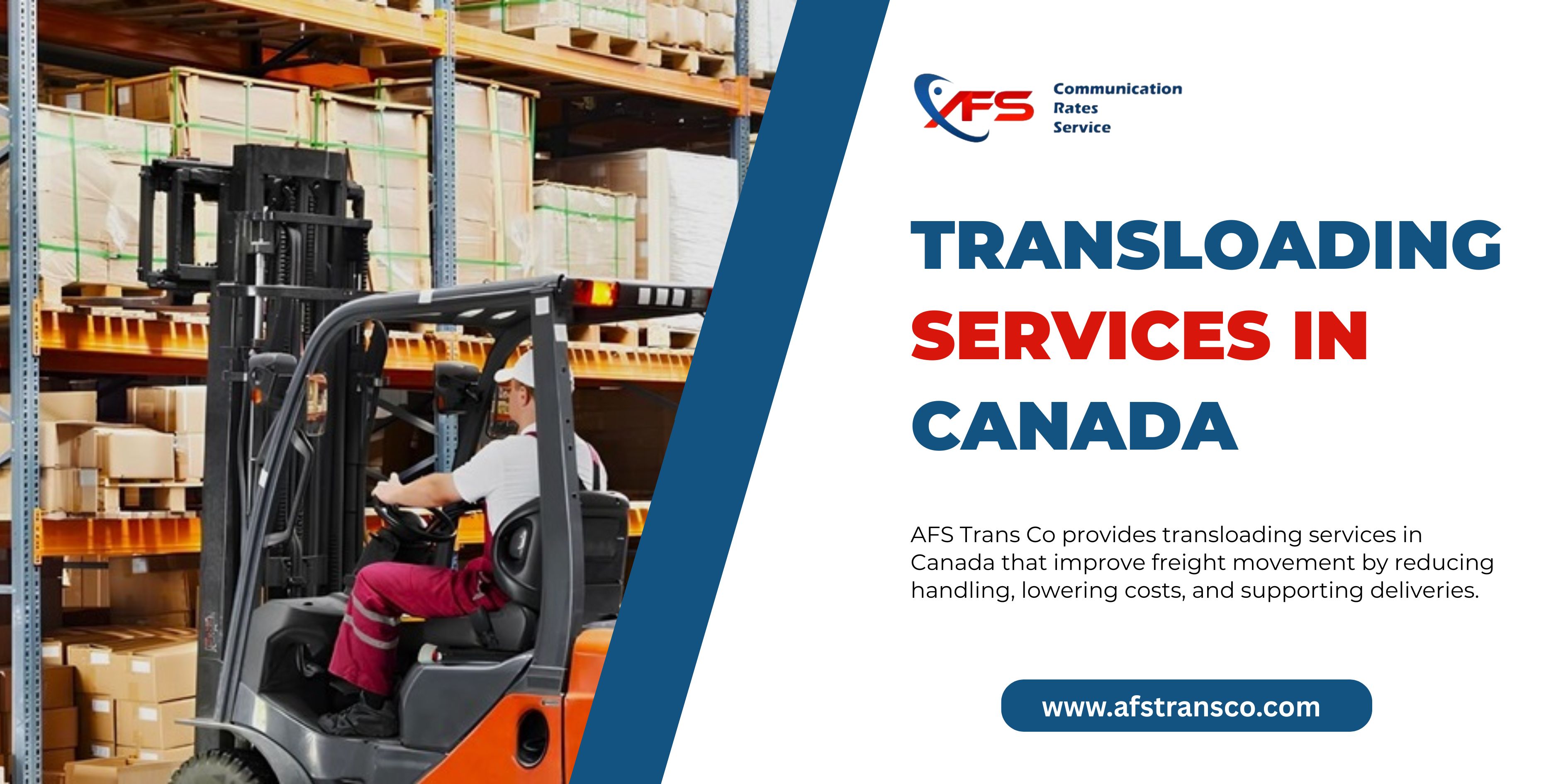
For businesses importing from overseas, another often underutilized service worth knowing about is cross-docking services, where incoming shipments are transferred directly from inbound trucks to outbound vehicles with minimal storage time. This approach significantly reduces handling costs and speeds up distribution, especially useful for time-sensitive products or when inventory management needs to stay lean.
Choosing the Right Fulfillment Partner in Vancouver
Not every 3PL is built the same, and the wrong choice can create as many problems as it solves. Here's what to actually look for.
Technology integration: Ask specifically what platforms they integrate with and how the data flows. If there's a 20-minute delay between an order being placed and the 3PL receiving it, that's fine. If it's 24 hours, you'll run into problems with cancellations, inventory discrepancies, and customer complaints.
Transparency on pricing: Fulfillment pricing involves a lot of line items: receiving fees, storage fees, pick-and-pack fees, special project fees, return handling, and more. A trustworthy provider will walk you through every component clearly. Be cautious of anyone who gives you a single flat rate without explanation.
Location within the Lower Mainland: Even within Vancouver and the surrounding area, location affects your shipping speed and costs. Proximity to the Port of Vancouver, access to major highways like the Trans-Canada, and distance from key distribution hubs all factor into how quickly orders leave the building and how much you pay to get them there.
Communication and accountability: This might sound soft compared to tech specs and pricing tables, but your 3PL relationship is a long-term partnership. When something goes wrong, and at some point something will, you want a team that responds quickly, takes ownership, and communicates honestly. Talk to their existing clients if you can.
Industry-specific experience: Some 3PLs specialize in apparel and retail, others in health and beauty, others in food-grade or temperature-sensitive products. If your product category has specific compliance or handling requirements, make sure your provider has done it before.
Canadian Regulatory Considerations You Shouldn't Skip
Businesses new to outsourced fulfillment sometimes don't think about the compliance side until it's too late. A few things worth keeping on your radar:
If you're importing goods, your 3PL and customs broker need to work closely together. Goods entering Canada are subject to duties, GST, and sometimes additional tariffs depending on origin and product category. Understanding where responsibility sits in that chain protects you from delays and unexpected costs.
Provincial sales tax is another layer. Depending on where your customers are located and where your inventory is physically held, your tax obligations can vary. British Columbia has its own PST rules on top of GST, and fulfilling from a Vancouver warehouse can create nexus considerations if you're also shipping to customers in other provinces or into the U.S.
It's worth having a conversation with an accountant who understands cross-border e-commerce before you fully commit to a fulfillment setup.
A Note on Local Providers Worth Knowing
AFS Trans Co. is one of the Vancouver-area logistics providers that has built a reputation around serving Canadian businesses with practical, operationally focused fulfillment solutions. Their approach to warehousing and distribution reflects the kind of hands-on attention that smaller and mid-sized businesses often struggle to find among the larger national players. For companies that want a partner who understands the specific dynamics of the Vancouver logistics corridor, including port proximity and cross-border complexity, AFS Trans Co. brings the kind of local knowledge that genuinely matters in day-to-day operations.
Common Mistakes Businesses Make When Outsourcing Fulfillment
Moving too early or too late: Some businesses outsource when they're shipping 10 orders a day and haven't yet felt the real pain of doing it themselves. Others wait until they're completely overwhelmed. Neither is ideal. A general rule of thumb is that around 50 to 100 orders per day is when the economics of outsourcing start to make clear sense, though this varies by product size, complexity, and your own capacity.
Not testing the integration before going live: This is a significant operational risk. Test the full order flow from purchase to shipment with real orders before you fully transition. Find the gaps when the stakes are low.
Ignoring the SLA details: Service Level Agreements define what your 3PL is committed to: order processing times, inventory accuracy, claims processes. Read them carefully. Know what recourse you have if they fall short.
Assuming they'll manage your inventory strategy: A 3PL manages the physical execution. Deciding when to reorder, how much to hold, what your safety stock levels should be, that's still on you. Don't confuse outsourcing logistics with outsourcing inventory management.
Closing Thoughts
Logistics in Canada is genuinely complex. The distances are vast, the regulatory layers are real, and the expectations of today's online shoppers for fast, accurate, and affordable delivery are unforgiving. Vancouver's position as a port city and logistics hub offers Canadian businesses a real structural advantage, but only if you partner with the right people and understand how the system actually works.
The best fulfillment relationships are the ones where you stop thinking about logistics entirely, not because it's been neglected, but because it's been handled so well that your attention is free to go where your business needs it most. That's the goal. Everything else in this article is just the path to get there.