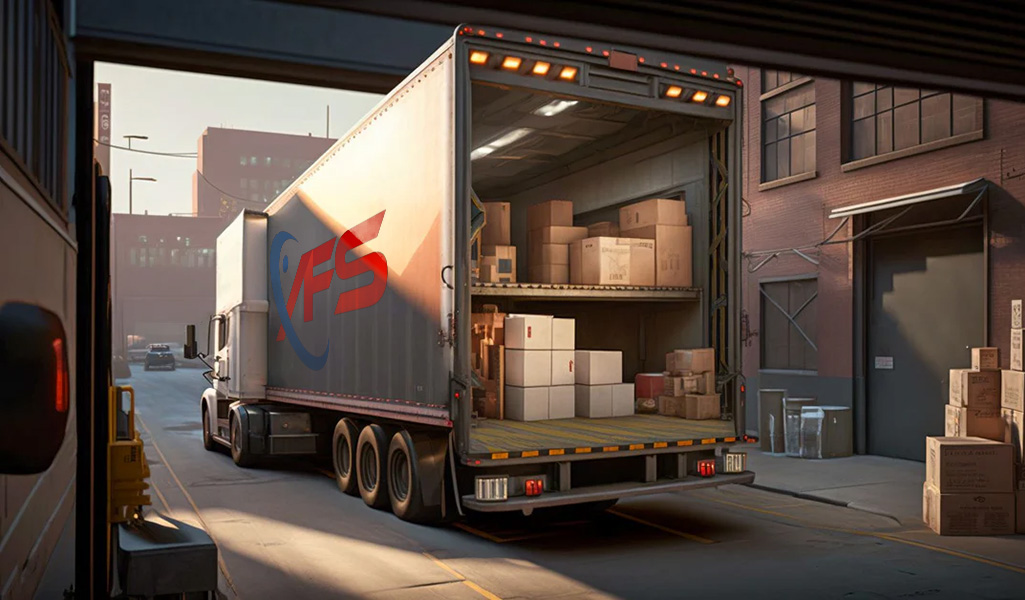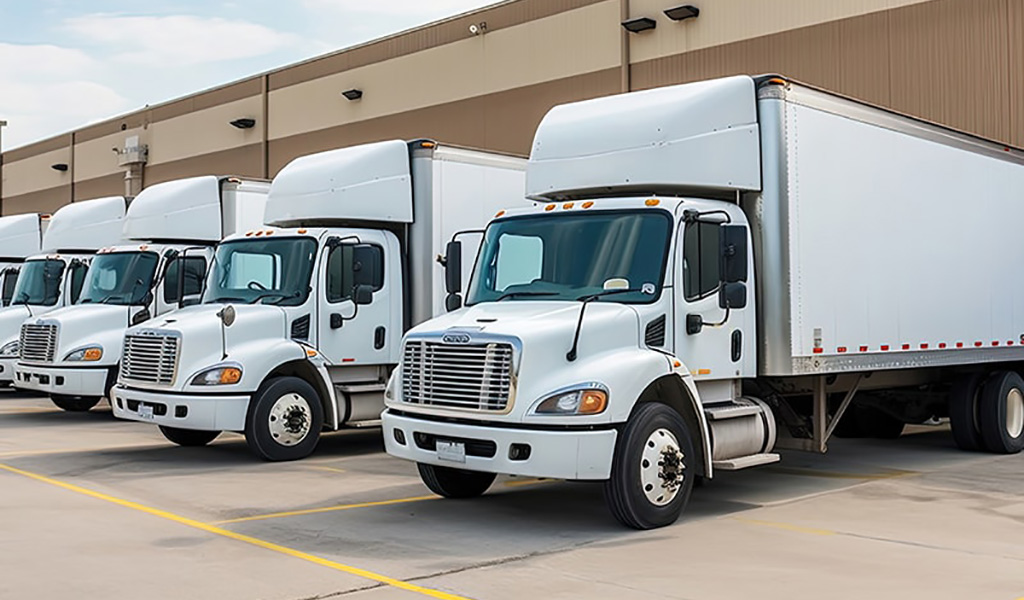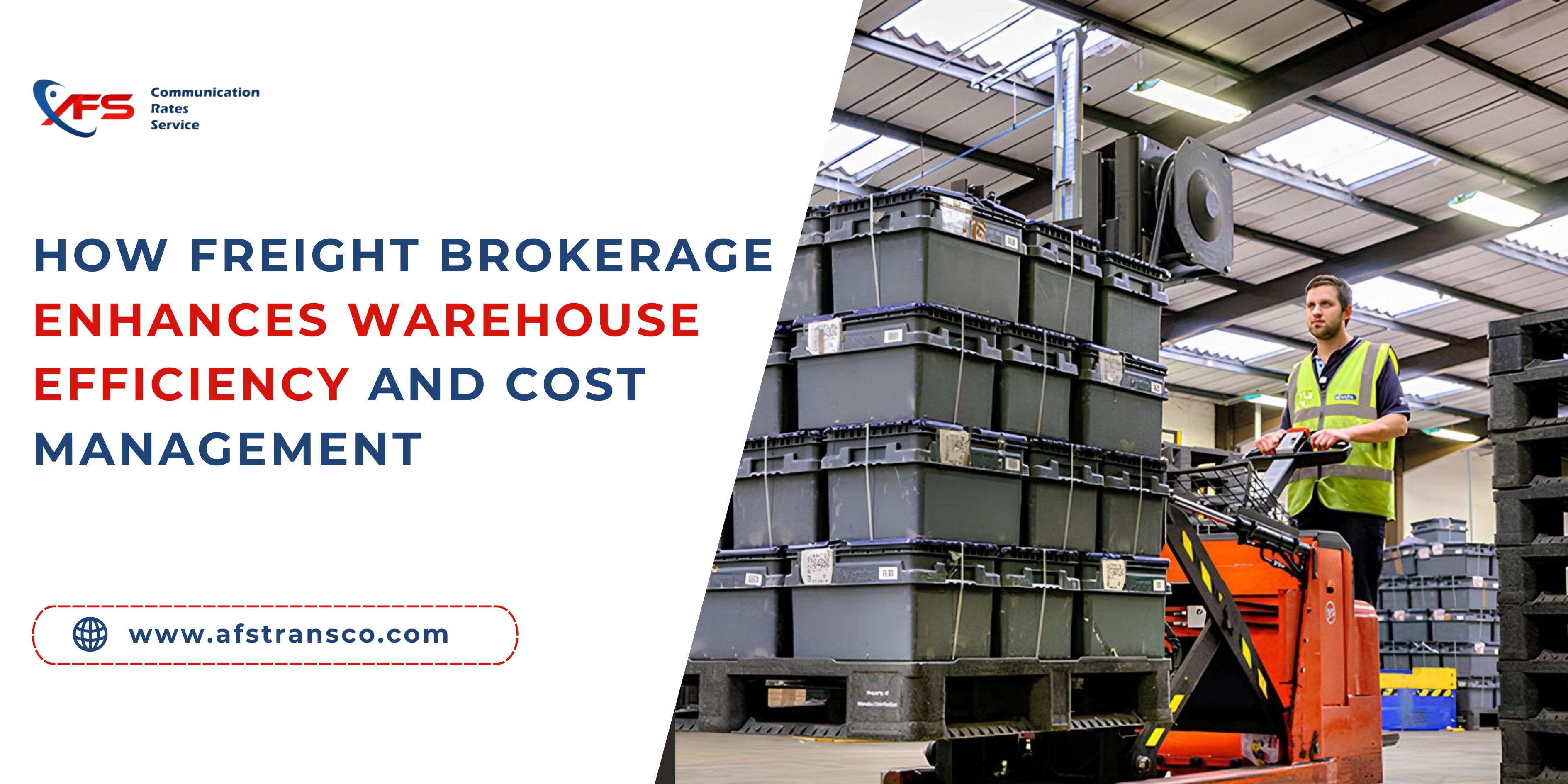
If you have ever typed "how do I get my products from my warehouse to my customer's door without losing my mind" into Google at 1 a.m., you are not alone. Most business owners hit this wall the moment their order volume outgrows a garage, a spare room, or a rented storage unit. That is usually the point where they start hearing the term Warehousing Fulfillment Services thrown around by every logistics vendor, LinkedIn post, and industry newsletter.
But what does it actually mean? And more importantly, does your business even need it yet?
This guide breaks it down in plain language. No jargon walls, no recycled definitions copied from a textbook. Just a clear, practical look at what these services involve, how they work day to day, and what to watch for before you sign a contract with anyone, including a provider like AFS Trans Co.
What Warehousing Fulfillment Services Actually Mean
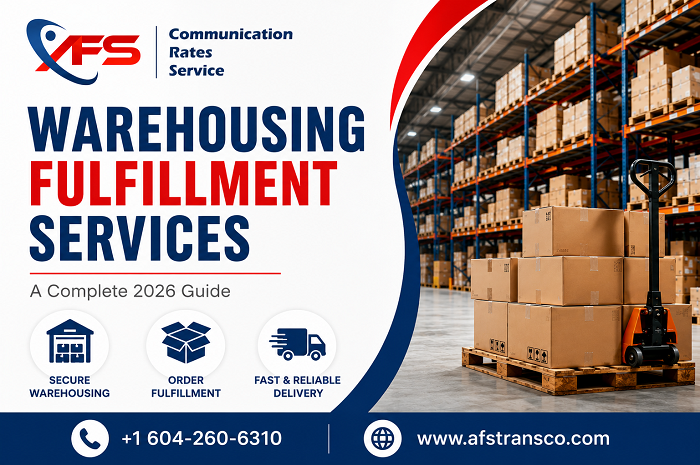
At its core, this term describes a bundled set of logistics functions that combine two things that used to be handled separately: storing inventory and getting that inventory into customers' hands.
A traditional warehouse is fairly passive. Boxes come in, boxes sit on shelves, boxes eventually go out in bulk. There is not much happening in between.
Fulfillment, on the other hand, is active. It covers receiving individual orders, picking specific items off a shelf, packing them properly, printing a label, and handing them to a carrier, often within hours of the order being placed.
When a provider offers both under one roof, that is what people mean by Warehousing Fulfillment Services. You are not just renting space. You are outsourcing the entire middle section of your supply chain, from the moment inventory arrives to the moment a customer opens their package.
For small and mid-sized brands, this distinction matters a lot. It is the difference between paying for four walls and a loading dock, versus paying for a team that actually moves your product for you.
How the Process Works Behind the Scenes
Here is where most guides get vague, so let's get specific. A typical fulfillment cycle looks something like this:
Receiving. Inventory arrives at the warehouse, usually on pallets or in bulk cartons. Staff check quantities against purchase orders and inspect for damage before anything gets shelved.
Storage and inventory management. Each product gets assigned a SKU and a bin location. Good providers use a warehouse management system (WMS) that tracks stock levels in real time, so you are not guessing whether you have 40 units left or 4.
Order processing. When a customer places an order on your Shopify store, Amazon listing, or B2B portal, that order flows into the fulfillment center's system, often automatically through an API integration.
Picking and packing. A team member (or increasingly, an automated system) locates the item, pulls it, and packs it according to your specifications. This might include branded boxes, inserts, or specific packaging for fragile goods.
Shipping. The package is labeled, handed to a carrier, and tracking information gets pushed back to your store so the customer knows exactly where their order is.
Returns handling. A good provider also manages the reverse of this process, inspecting returned items, restocking what is sellable, and updating your inventory counts accordingly.
None of this happens by magic. It requires trained staff, decent technology, and a facility layout that is actually designed for speed rather than just square footage.
Why More Businesses Are Outsourcing This in 2026
A few years ago, plenty of founders handled fulfillment themselves out of necessity. It was cheaper, and honestly, there was a certain pride in packing every box yourself. I get it. There is something satisfying about that hands-on control.
But growth has a way of exposing the cracks in that approach. Once you are shipping a few hundred orders a day, the math stops working in your favor. You are paying rent on space you are not using efficiently, hiring seasonal staff you have to train from scratch every quarter, and losing entire days to shipping errors that a dedicated team would catch immediately.
This is exactly why demand for Warehousing Fulfillment Services has climbed so sharply. Customers now expect two-day shipping as a baseline, not a luxury. Meeting that expectation without a distributed network of fulfillment centers is close to impossible for most independent brands.
There is also a quieter reason behind the shift: mental bandwidth. Founders who outsource this piece of their operation consistently report that they finally have room to think about product development, marketing, and actual growth strategy, instead of chasing down a missing tracking number at 9 p.m.
What a Modern Fulfillment Warehouse Actually Includes
Not every provider offers the same depth of service, and this is where a lot of businesses get burned by vague sales pitches. A genuinely capable fulfillment partner typically includes:
- Real-time inventory visibility through a dashboard you can access anytime
- Multiple warehouse locations to reduce shipping zones and transit time
- Kitting and bundling for promotional or subscription products
- Custom packaging and branded unboxing experiences
- Integration with your existing sales channels and platforms
- Returns processing that does not require you to babysit every step
- Scalable capacity for seasonal spikes, like the holiday rush
If a provider cannot speak clearly about most of these, that is worth noticing before you commit.
Choosing the Right Partner Without Getting Burned
This is the part nobody tells you plainly enough. Picking a fulfillment partner is closer to hiring a co-founder than signing a vendor contract. You are handing over the physical relationship your customers have with your brand.
A few things worth checking before signing anything:
Ask about error rates. Anyone can promise accuracy. Ask for actual numbers on pick and pack errors, and how they handle it when mistakes happen.
Look at their tech stack, not just their warehouse photos. A clean facility means little if their software cannot talk to your store platform.
Understand the true pricing structure. Storage fees, pick fees, packaging fees, and shipping markups can add up in ways that are not obvious from a sales call.
Check their location network. A single warehouse on one coast will not help your delivery times if most of your customers live on the other side of the country.
Providers like AFS Trans Co. have built their reputation around transparency on exactly these points, which is honestly rare in an industry that often hides pricing behind vague quotes. Whichever company you evaluate, insist on the same level of clarity. You are not just buying storage space. You are buying reliability, and that is worth being picky about.
Common Mistakes Businesses Make
A few patterns show up again and again with brands that switch providers within their first year:
They choose based on price alone and end up with slow shipping times that hurt customer reviews. They underestimate how much their own SKU complexity (multiple sizes, colors, bundles) will affect fulfillment accuracy. And they fail to ask what happens during peak season, only to discover their orders are delayed right when volume matters most.
Avoiding these mistakes usually comes down to asking uncomfortable questions early, rather than assuming every provider offering Warehousing Fulfillment Services operates the same way. They genuinely do not.
Final Thoughts
There is no universal moment when a business "needs" to outsource this part of its operation. Some brands make the jump at a hundred orders a month because they value their time more than the cost savings of doing it themselves. Others wait until they are drowning in boxes before finally picking up the phone.
What matters more than timing is understanding exactly what you are paying for. Storage alone is not enough anymore. The real value sits in the combination of speed, accuracy, and visibility that a proper fulfillment partner brings to your operation. Whether you end up working with AFS Trans Co. or another established name in the space, the businesses that get the most out of this relationship are the ones that treat their fulfillment partner as an extension of their own team, not just a warehouse down the street.
Get the fundamentals right, ask the right questions upfront, and this piece of your supply chain can quietly become one of your biggest competitive advantages instead of your biggest headache.
Frequently Asked Questions
Everything you need to know about our warehouse & 3PL services.