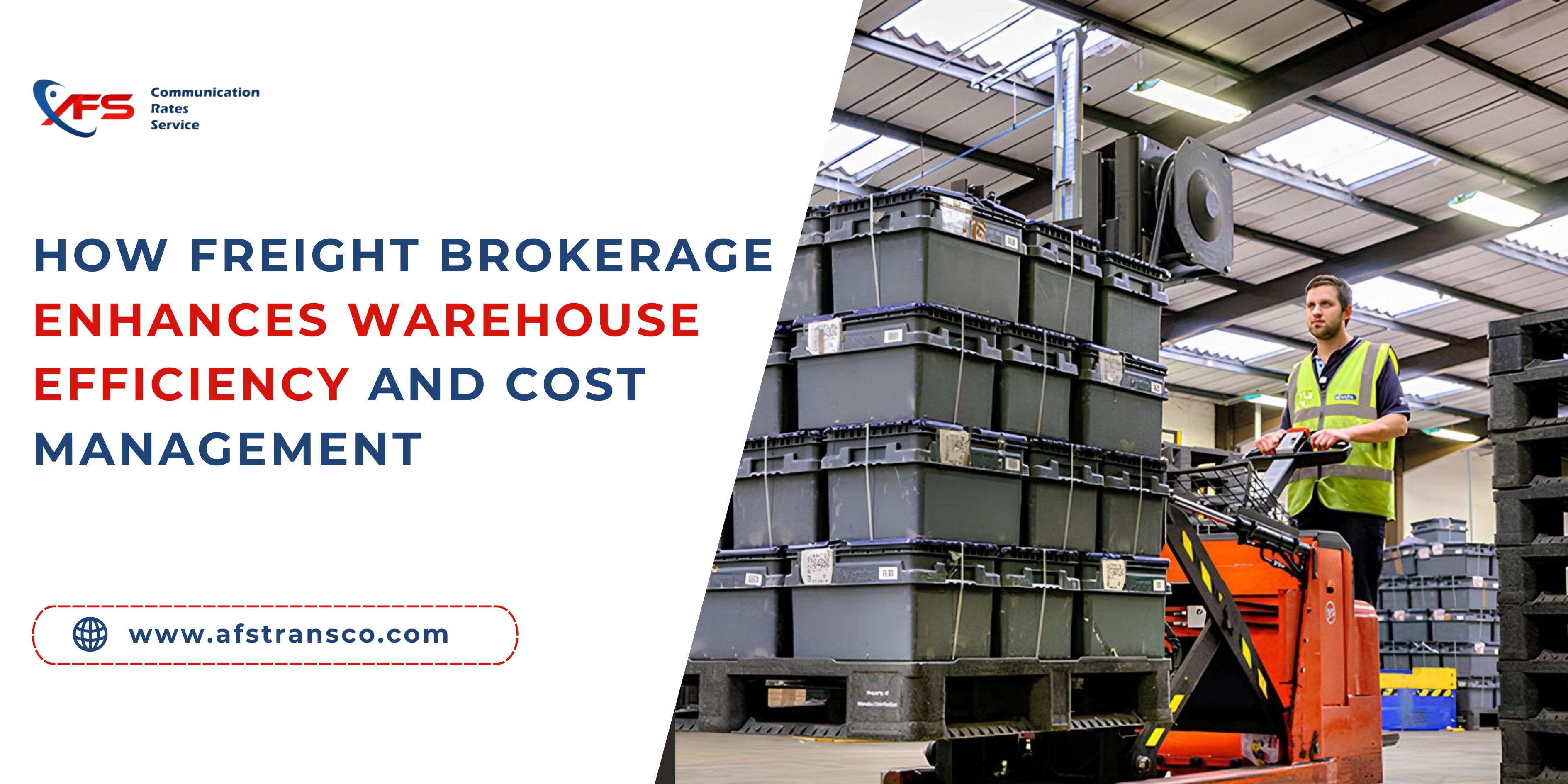
Walk through any major distribution hub in Ontario, Alberta, or British Columbia today and you'll notice something that wasn't true five years ago: there's a constant hum of urgency. Forklifts move faster. Conveyor belts don't stop. Shift supervisors carry tablets instead of clipboards.
Canada's logistics and warehousing sector has quietly become one of the most dynamic parts of the national economy. It's not glamorous work in the traditional sense, but it underpins almost everything Canadians buy, eat, and use. And right now, it's going through a transformation that touches every tier of the supply chain.
This blog breaks down what's actually happening in the warehousing supply chain in Canada in 2026, from the macro trends reshaping real estate and investment decisions, to the ground-level challenges warehouse managers lose sleep over, to the emerging opportunities that forward-looking operators are already capitalizing on.
The State of the Warehousing Supply Chain in Canada Right Now
Let's start with the numbers, because they tell a story.
According to recent industry data, Canada's warehousing and storage market was valued at approximately CAD $22.4 billion in 2024 and is expected to surpass CAD $28 billion by 2027. The Greater Toronto Area (GTA), Metro Vancouver, and Calgary's logistics corridor remain the three most sought-after markets for industrial real estate, with vacancy rates hovering between 1.8% and 3.5% depending on the quarter.
E-commerce is the obvious accelerant. Online retail in Canada grew by roughly 11% year-over-year in 2025, and that growth doesn't happen without last-mile infrastructure and fulfillment centers to back it up. Every percentage point of e-commerce growth creates demand for roughly 1.2 to 1.5 million additional square feet of warehousing space nationally.
But it's not just e-commerce. Pharmaceutical cold chain logistics, automotive parts distribution, and food & beverage warehousing are all growing sectors adding pressure to available industrial space.
Top Trends Shaping the Warehousing Supply Chain in Canada in 2026
1. Nearshoring and Domestic Inventory Buffering
The pandemic taught Canadian businesses a painful lesson: relying on overseas production with thin inventory buffers is a liability. Since 2022, many mid-sized importers have shifted toward holding 30 to 60 days of additional safety stock domestically. This "just-in-case" mindset, replacing the decades-long "just-in-time" model, has dramatically increased warehousing square footage requirements.
Companies like AFS Trans Co. have responded to this shift by expanding their short-term and flex-lease warehousing options, giving clients the ability to scale storage capacity seasonally without long-term capital commitments.
2. Automation and Robotics Adoption
This is the trend that generates the most industry conversation. Automated storage and retrieval systems (AS/RS), collaborative robots (cobots), AI-powered inventory management, and autonomous mobile robots (AMRs) are no longer exclusive to Amazon-scale operations.
In 2026, even mid-size third-party logistics (3PL) providers are deploying robotic picking systems and smart conveyor networks. The ROI math has changed: the cost of warehouse automation has dropped by roughly 35% since 2020, while labor costs have climbed steadily. For most operations running two or more shifts, automation pays for itself within 18 to 36 months.
3. Sustainability and Green Warehousing
Environmental, Social, and Governance (ESG) requirements from major retail and CPG clients are now filtering down to their logistics partners. Warehouse operators across Canada are responding with solar panel installations, LED lighting retrofits, electric forklift fleets, and LEED-certified facility upgrades.
Carbon footprint reporting for logistics operations is increasingly becoming a contractual requirement rather than a nice-to-have. In British Columbia and Quebec, provincial carbon pricing policies are adding further incentive for cleaner operations.
4. Real-Time Visibility and Supply Chain Intelligence
Warehouse management systems (WMS) have evolved significantly. In 2026, the best systems integrate IoT sensor data, predictive analytics, and real-time carrier tracking into a unified dashboard. Shippers want to know where their goods are at every moment, and logistics providers who can't deliver that visibility are losing contracts to those who can.
The integration of AI into demand forecasting is also reducing overstock and stockout situations, improving inventory turn ratios across the board.
5. Cold Chain Expansion
Canada's aging population, pharmaceutical boom, and premium food market growth are driving exceptional demand for temperature-controlled warehousing. Cold storage vacancy rates in major Canadian markets are extremely tight, often below 1%, and new cold chain facility development has a 12 to 18-month lag time due to construction complexity.
Challenges Facing Canadian Warehousing Operators Today
Labor Shortages: Still the Biggest Headache
Despite automation gains, human labor remains central to most warehousing operations. And finding it is hard. Canada's warehousing sector faces a structural labor gap that is unlikely to resolve quickly. An aging workforce, competition from service industries, and geographic mismatches between where people live and where warehouses are built all contribute to chronic understaffing.
Turnover rates in warehouse operations can reach 40 to 60% annually at some facilities. This isn't just an HR problem, it's an operational continuity problem. High turnover means constant training costs, inconsistent quality, and safety risks.
Industrial Real Estate Costs
Industrial land and building costs in Metro Vancouver and the GTA have risen dramatically. A distribution center that might have leased for $8 per square foot in 2018 in some GTA submarkets is now commanding $18 to $22 per square foot or more. For smaller operators, this is existential.
The result is a bifurcation: large, well-capitalized 3PLs are consolidating their footprint in premium locations, while smaller players are being pushed to secondary markets in Hamilton, Kitchener-Waterloo, Edmonton, and Moncton.
Cross-Border Trade Uncertainty
US-Canada trade relations in 2025 and 2026 have introduced a layer of unpredictability that supply chain managers genuinely struggle with. Tariff adjustments, customs processing delays, and regulatory changes at the border add friction and cost to cross-border warehousing flows. Many businesses have responded by duplicating inventory on both sides of the border, which solves one problem but creates another: higher carrying costs.
Cybersecurity Risks
As warehouse technology becomes more connected, it also becomes more vulnerable. A ransomware attack on a WMS or logistics platform can freeze operations entirely. The Canadian Centre for Cyber Security has identified supply chain infrastructure as a growing target. Most mid-market operators are significantly underinvested in cybersecurity, and the risk is not theoretical.
Growth Opportunities in the Warehousing Supply Chain in Canada
Opportunity 1: Secondary Markets and Inland Ports
The congestion and cost pressures in primary markets are creating genuine opportunity in secondary cities. Locations like Regina, Lethbridge, Sudbury, and Fredericton offer lower land costs, available labor, and improving infrastructure connectivity. Inland port development in several prairie locations is also attracting distribution investment.
Opportunity 2: Multi-Client and Shared Warehousing (3PL Growth)
Rather than every company building and managing its own warehouse, the trend toward outsourced, shared warehousing is accelerating. The Canadian 3PL market is projected to grow at 7.4% annually through 2028. For businesses, it's a capex-to-opex shift. For 3PL operators like AFS Trans Co., it represents a significant expansion runway.
Opportunity 3: Last-Mile Fulfillment Innovation
Urban last-mile delivery is an area ripe for disruption. Micro-fulfillment centers embedded in urban cores, dark stores, and parcel locker networks are all nascent in Canada compared to European markets. There's real first-mover advantage for operators willing to invest in this space.
Opportunity 4: Pharmaceutical and Healthcare Logistics
Canada's healthcare system generates enormous warehousing demand, and the pharmaceutical cold chain is one of the most specialized and margin-rich segments in logistics. With Health Canada regulations requiring rigorous documentation and temperature control, qualified operators can command premium rates.
Opportunity 5: Indigenous Community Supply Chain Access
Remote and northern communities across Canada remain dramatically underserved by modern supply chain infrastructure. There are emerging funding programs and partnership opportunities for logistics providers willing to invest in this space, with both commercial upside and meaningful social impact.
Conclusion: The Road Ahead Is Complex, But the Direction Is Clear
There is no simple story here. The warehousing supply chain in Canada in 2026 is a sector navigating genuine tension: between rising demand and constrained supply, between the push for automation and the need for human talent, between sustainability commitments and operational realities.
But complexity is not the same as stagnation. The operators who are thriving right now share a few characteristics. They invested early in technology. They built relationships with clients that go beyond transactional. They stayed flexible when market conditions shifted. And they made decisions with a long view in mind, even when short-term pressures were loudest.
Companies like AFS Trans Co. represent what that looks like in practice: logistics partners who understand that warehousing isn't just about square footage, it's about trust, reliability, and the ability to evolve alongside your clients' needs.
For businesses evaluating their supply chain strategy in Canada, the message is simple: the decisions you make in the next 18 to 24 months about warehousing partnerships, technology investment, and inventory strategy will define your competitive position for the rest of the decade. The market is not waiting.
Frequently Asked Questions
Everything you need to know about warehousing supply chain in Canada.