Quick Answer
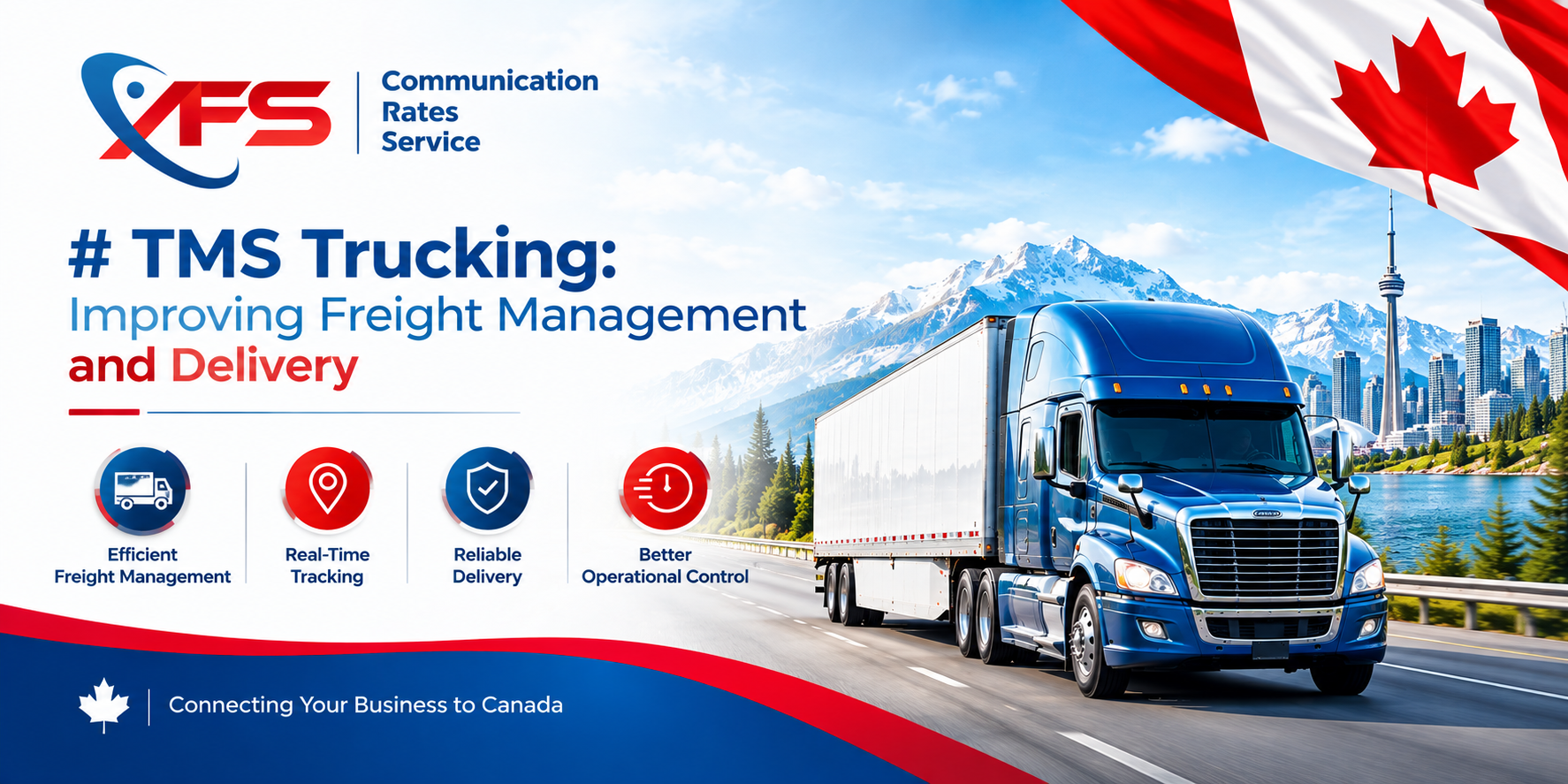
TMS trucking means running your freight through a transportation management system (TMS), software that books, tracks and documents every shipment in one place. For shippers, that means live shipment status, Bills of Lading and invoices stored where you can find them, fewer data-entry errors, and quicker answers when a delivery changes.
At AFS Trans Co., our Transportation Management System gives customers 24/7 tracking, ERP integration and an optional customer portal with chat.
Introduction
Picture a furniture importer in Surrey with a container of dining sets arriving at the port. A retailer in Calgary wants half of them by Friday. The rest need to sit in storage until a showroom opens in Ontario. Somewhere between the dock, the truck and the loading bay, a Bill of Lading goes missing, the delivery appointment slips, and three people start sending emails to find out where the freight is.
That scene is common, and it is exactly what TMS trucking is built to prevent. A good system will not drive the truck for you. What it does is keep the people, the paperwork and the freight pointed at the same facts.
In this guide, we explain what a TMS does, how it supports bulky and fragile freight such as furniture, where it fits alongside warehousing, and what to ask before you hire a carrier or one of the freight forwarding companies in Vancouver. Everything here comes from how we run freight at AFS Trans Co., so you will see our own tools used as examples.
What Is TMS Trucking?
A transportation management system is software that handles the planning, execution and follow-up of freight moves. TMS trucking simply means a trucking operation uses that system day to day instead of relying on phone calls, spreadsheets and email threads.
In practice, a TMS typically covers four jobs:
- Order entry: pickup and delivery details are captured once, correctly.
- Tracking: shipment status updates in one shared view.
- Documents: Bills of Lading, commercial invoices and proof of delivery stay attached to the load.
- Communication: customers and dispatchers see the same information, so there is less back and forth.
TMS vs. Manual Freight Management
The difference shows up fastest when something goes wrong. Here is how a typical day compares:
Booking a shipment: Without a TMS, details are often re-typed across emails and forms. With TMS trucking, shipment information is entered once and reused throughout the record.
Checking location: Manual tracking may require calling or emailing dispatch and waiting for updates. A TMS allows shipment status to be checked online at any time.
Finding a BOL: Without a TMS, locating a BOL can mean searching through inboxes and shared drives. With a TMS, documents can be accessed directly from the shipment record.
Invoicing: Manual invoicing requires matching paperwork by hand. A TMS can link documents to the load and may support ERP integration.
Handling a delay: Manual processes often involve phone calls between the shipper, carrier and receiver. A TMS keeps communication and updates in one shared record.
What a TMS Does for Your Freight
Software features only matter if they solve a real problem. These are the ones we see customers use most.
Real-Time Tracking and AFS Logistics Tracking
Our TMS lets customers monitor shipments around the clock, so the question “where is my freight?” can be answered without a phone call. If you want the full picture of how status updates work from pickup to delivery, our guide to AFS logistics tracking walks through it step by step.
Document Storage
Every shipment generates paper: Bills of Lading, commercial invoices, delivery receipts. The TMS stores these with the shipment, so a billing question three weeks later does not turn into a hunt through old email threads. This matters most on cross-border moves, where a missing or mismatched document can hold a truck at the border.
ERP Integration
If your business runs on an ERP system, the TMS can connect to it. Document requests, shipment updates and accounting steps can move between the two systems rather than being re-keyed by hand. Less re-keying means fewer typos in addresses, weights and reference numbers, which are the small mistakes that cause large delays.
Customer Portal and Chat
Portals can be set up so customers check shipment status, upload paperwork and message our team directly. For a busy operations manager, that replaces a morning of status emails with a single login.
Expert Tip
Before you sign with any carrier, ask to see what a customer actually sees: the tracking screen, the document view and the way exceptions are flagged. A demo tells you more than a feature list does.
Why TMS Trucking Matters for Furniture and Bulky Freight
Furniture is awkward freight. Sofas, sectionals, mattresses and flat-pack cabinets take up a lot of trailer space, scratch easily and often ship to several drop points. A few details make a TMS especially useful here:
- Delivery appointments. Retail docks and warehouses often require booked windows. A shared record helps everyone work from the same appointment time.
- Piece counts and weights. Furniture claims often start with a disagreement over how many pieces were loaded. Documents stored with the load give both sides a reference.
- Mixed shipments. A showroom restock may be a handful of pallets, not a full trailer. In that case less-than-truckload (LTL) service can be more economical, and a TMS keeps those partial loads visible as they move.
- Multiple stakeholders. Importers, retailers, installers and customers all want updates. A portal cuts the number of calls dispatch has to field.
None of this removes the need for good packaging and careful handling. What it does is give you a clear record to work from if something arrives damaged or late.
Need a Quote for Furniture Freight?
Tell us what you are moving, where it is going and when it needs to arrive. Our team will recommend truckload or LTL and set up tracking from the first pickup. Request a free quote or call 604-674-4930.
TMS Trucking and Dedicated Warehouses in Canada
Freight does not always go straight from truck to customer. Seasonal furniture lines, imported stock waiting on a showroom launch and slow-moving inventory all need a place to sit. That is where dedicated warehouses in Canada come in.
A dedicated warehousing arrangement gives your business exclusive control over its storage space and inventory handling, which helps when volumes swing or products need careful handling. When the same provider runs your trucking and your warehouse, the TMS can follow goods from inbound delivery through storage and out to the final drop. There is no handoff gap where information gets lost.
AFS Trans Co. operates warehouses in Surrey, Calgary, Brampton and Cambridge, so shippers can stage inventory closer to where it will sell. If you are weighing the pros and cons, our article on the key benefits of dedicated warehouses for Canadian businesses breaks down when this model pays off.
Shared vs. Dedicated Warehouse Space
- Control over layout: Shared warehouse space usually provides limited control over the layout. Dedicated space can be organised around your products and handling requirements.
- Best for different volumes: Shared storage can work well for steady and predictable inventory. Dedicated warehouses are better suited to fluctuating volumes or products that require specific handling.
- Inventory visibility: With shared space, visibility depends largely on the provider's systems. Dedicated storage can make it easier to connect warehouse information with your TMS and ERP.
- Flexibility: Shared warehouse arrangements are generally limited by the building and available space. Dedicated warehouse space can be structured around your operational needs.
How to Choose a Carrier or Freight Forwarder in Vancouver
Vancouver is a gateway port, so shippers here have plenty of options. Among the freight forwarding companies in Vancouver, technology and service quality vary a lot. Cost matters, but a low rate does not help if you cannot see where your freight is.
Our guide on how to find reliable freight forwarding companies in Vancouver goes deeper, but start with this checklist:
- Tracking access: Choose a provider that lets you check shipment status online without having to call for every update.
- Document handling: BOLs, invoices and other important documents should be organised and easy to retrieve when needed.
- System integration: ERP connectivity can reduce manual data entry and help prevent reporting delays.
- Cross-border experience: Ask how the provider manages customs paperwork and prevents documentation errors that could delay shipments.
- Dispatch availability: Freight issues can happen outside normal working hours, so ask whether the provider offers 24/7 dispatch support.
- Safety and compliance: Review the carrier's safety and compliance record before booking to make sure they meet the required standards.
How to Get Started With TMS Trucking
Switching to a carrier that runs a TMS is usually straightforward. A typical onboarding looks like this:
- Share your freight profile. Tell us what you ship, how often, and the lanes you use most.
- Decide what you want to see. Tracking only, or also documents, invoices and a portal.
- Connect your systems. If you use an ERP, we discuss how the TMS can link to it.
- Run a pilot shipment. Start with one lane or one customer and check that the information matches reality.
- Expand. Add lanes, warehousing or cross-border moves once the process works.
Common Mistakes to Avoid
- Choosing on rate alone. A cheap quote with no visibility often costs more in staff time.
- Skipping document discipline. The TMS only helps if BOLs and invoices are uploaded and accurate.
- Treating trucking and warehousing separately. Information gaps appear where one provider hands off to another.
- Not training your own team. Spend an hour learning the portal. It saves a lot of calls later.
If you want a deeper look at the numbers, our post on the benefits of using a transportation management system for freight covers the cost and efficiency side in more detail.
Conclusion
TMS trucking will not change how heavy a sofa is or how far Calgary is from Surrey. What it changes is how much time you spend chasing information. Live tracking, stored documents, ERP links and a customer portal take the guesswork out of freight, and they matter most when your goods are bulky, fragile or headed to several places at once.
If you ship furniture, retail goods or any freight that needs a clear paper trail, ask any carrier to show you their system before you commit. We are happy to do the same.
Talk to an Afs Trans Co. Logistics Specialist
Ready to see how our TMS would work for your freight? Get a free quote, call 604-674-4930, or email admin@afstransco.com. We are open 8:00 a.m. to 4:00 p.m., and our office is at 103-15030 54A Avenue, Surrey, BC.B
Frequently Asked Questions About TMS Trucking
What does TMS stand for in trucking?
TMS stands for transportation management system. It is software that helps plan, track and document freight moves, from the first pickup to proof of delivery.
How does TMS trucking help shippers?
It gives you one place to check shipment status, find documents and communicate with your carrier. That means fewer status calls, fewer paperwork errors and faster resolution when a delivery changes.
Can a TMS connect to my ERP system?
Often, yes. The AFS Trans Co. TMS can integrate with your ERP to support document requests, shipment updates and accounting steps. Contact our team to discuss your setup.
Is a TMS useful for LTL and furniture shipments?
Yes. Partial loads and bulky goods involve more handoffs and more delivery appointments, so shared records and tracking matter even more than on a single full truckload.
How do I track a shipment with AFS Trans Co.?
Customers can follow shipments through our TMS, and portals can be set up for status checks, paperwork uploads and chat. Our AFS logistics tracking guide explains the process.
Do I need a dedicated warehouse to use a TMS?
No. A TMS works for trucking on its own. A dedicated warehouse becomes worth considering when you store inventory regularly and want storage and transport information in the same system.